
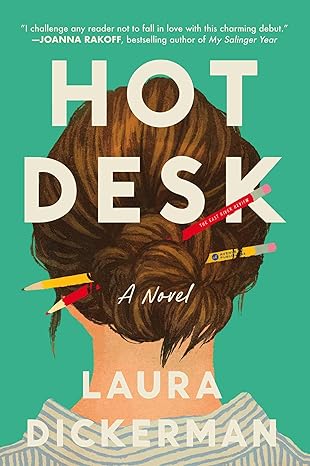
Hot Desk
Hot Desk is Laura Dickerman’s debut novel. Set in the New York literary world, there are dual timelines with two PoV characters in the present (2022) and a third in the past (1982). The 2022 timeline is a lighthearted rivals-to-lovers slow burn romance as junior editors Ben Heath and Rebecca Blume are forced to share a desk when their rival publishing companies combine their office space. They blame and demonise each other, even though they have never met. This satirical timeline is light and a bit rom-commy as they bicker on Post-it notes about who left the cactus on the desk, a rogue chocolate sultana and so on until they both end up on the Desk Share Cooperative Community Group Committee.
The bigger issue though – both for them and for the novel itself – is the aftermath of the recent death of literary great Edward David Adams (EDA), aka the Lion. Rose Adams, his third wife, is looking for a new person to manage both her husband’s legacy and his estate, and both Ben and Rebecca are in the running for that job. They jostle for Rose’s attention and the Estate’s business as they realise that it’s their connections that give them this opportunity – Rebecca’s mother was friends with Rose and Ben is friends with EDA’s son.
The second (1982) timeline perspective comes from Rebecca’s mother, Jane, who was Rose’s bestie when they interned together at EDA’s magazine, the East River Review in the early 1980s. Adams was a charismatic and complicated writer who held problematic views about women, but Jane and Rose were both in his thrall. Jane left New York and the East River Review at the end of her internship year, married and concentrated on bringing up her children, and she hasn’t spoken to Rose since. The mystery at the heart of the novel is why Jane left not only a promising writing career, but a close friendship with Rose, and what this means for EDA’s literary legacy. Jane’s experience at the East River Review is central to her life, and maybe similar to that of many young women at the time, and could have been explored with more nuance.
My other reservation about Hot Desk is that it is trying to do too much. The 1980s chapters touch on addiction, workplace harassment, the AIDS epidemic and homophobia, among other issues (please check the content warnings) but there’s not enough space to explore them in a meaningful way. There are so many characters, many of whom are juxtaposed with real people and events from the 1980s, but most of them do nothing to drive the plot.
Managing the tone between the dual plotlines is tricky and the author doesn’t always balance the comedic elements between Rebecca, Ben and the hot desk with the more provocative and profound relationships between Jane, Rose and EDA. The author’s intention may be for Rebecca and Ben to be the comic relief, but the transitions between these moods are not always smooth. Rebecca and Ben don’t meet until nearly three-quarters of the way in, so while there is attraction and frustration and chemistry between them, there’s not much of them together on the page.
Would I recommend Hot Desk? If you are interested in publishing history and social politics in the 1980s, then it’s an intriguing read. Jane and Rose’s story is engaging and more compelling than the underdeveloped romance between Ben and Rebecca. More of Jane and less of the hot desking and the book may have worked better for me, but as it is, I can’t honestly recommend it.
Recent Comments





Never been a fan of dual timelines. Even Godfather II didn’t work well for me.
I was intrigued by this one, but it sounds kinda lukewarm in the execution.