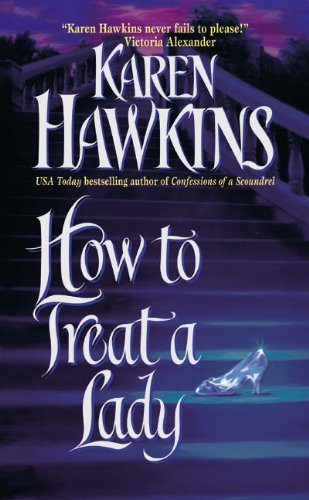
How To Treat A Lady
There are several ingredients in How to Treat a Lady that should have made it harder for me to enjoy this book than I did. Dialogue that sounded a bit anachronistic to my ear, and that creaky old plot device, amnesia, should have turned me off. But I discovered that in the right author’s hands, even things like this can work, and I ended up liking the book.
Left destitute in the wake of their profligate father’s death, the Ward family has had to pare down their standard of living and turned to raising sheep, using a bank loan as starter funds. Oldest daughter Harriet devised a clever plan to keep the bankers from foreclosing too quickly by inventing a rich fiancé, seafaring Captain John Frakenham, who presumably can make good on the loans. The ruse has worked, but now the bankers are getting suspicious and demanding repayment. If only Captain Frakenham were real, and could instantly appear! On the way to market with some sheep, Harriet and her sisters come across a man lying in the road, evidently the victim of robbers, and bring him home. The handsome stranger says he doesn’t remember who he is – hmmm…
Chase St. John did something quite stupid – criminal, really – and now someone’s blackmailing him. He decides to leave England and spare his august family the shame of his presence, but it seems he can’t even do that right. On his way to take ship for France, bandits waylay an inebriated Chase and leave him for dead. He comes to, realizes that he’s got a compelling reason to conceal his identity, and promptly fakes amnesia. Harriet’s mother reasons that since their surprise visitor doesn’t know who he is anyway, they can convince him that he’s the long-absent sailor. Before you can say Romance Plot Device, Chase is stuck impersonating “Captain Frakenham.” How long can Chase fool the Wards? How long can all of them fool the bankers? And how long can Chase and Harriet fight their mutual attraction?
This is a very funny book, and I liked both Harriet and Chase. Harriet is refreshingly commonsensical (is that a word? I remember it from a Heyer I read). She knows that pride has no place in the if-we-don’t-work-we’ll-starve predicament of her family, so she gets the whole family to roll up their sleeves. Her personality is strong without being overbearing, and Ms. Hawkins adds a nice touch of wistfulness to her heroine’s personality. Chase is pretty engaging, once he sobers up, although his constant I’m-not-worthy hand-wringing got a little old after a while. The humor of the faked-amnesia scenario, however, compensated adequately for that.
The rest of the Ward family was equally engaging, but I have to admit to some irritation with Chase’s clan, especially his oldest brother Marcus, Marquis of Treymount. This isn’t a gripe aimed directly at Ms. Hawkins because she’s not the only author who’s guilty of this, but I’m beginning to wonder just how many overbearing, enigmatic Rothgar (of Jo Beverley’s Malloren series) clones the genre can tolerate. In addition, the ending of the novel approaches a cross between a Keystone Kops episode and the dénouement of a British murder mystery, with everybody crowding into one room, jostling each other, a body falling out of a rolled-up carpet, and witty repartee flying across the parlor. Ms. Hawkins almost – but not quite, she’s that good – lets things get out of hand.
I can forgive an author a lot of sins if she’s got a voice that works for me. While Ms. Hawkins has a tendency to let her characters sound a little too modern for my taste, she makes up for that by making them engaging and sympathetic, and her writing style is easy to read. I enjoyed getting to know the Ward family and their unexpected guest, and I wouldn’t be surprised if you did, too.
Recent Comments