Joining
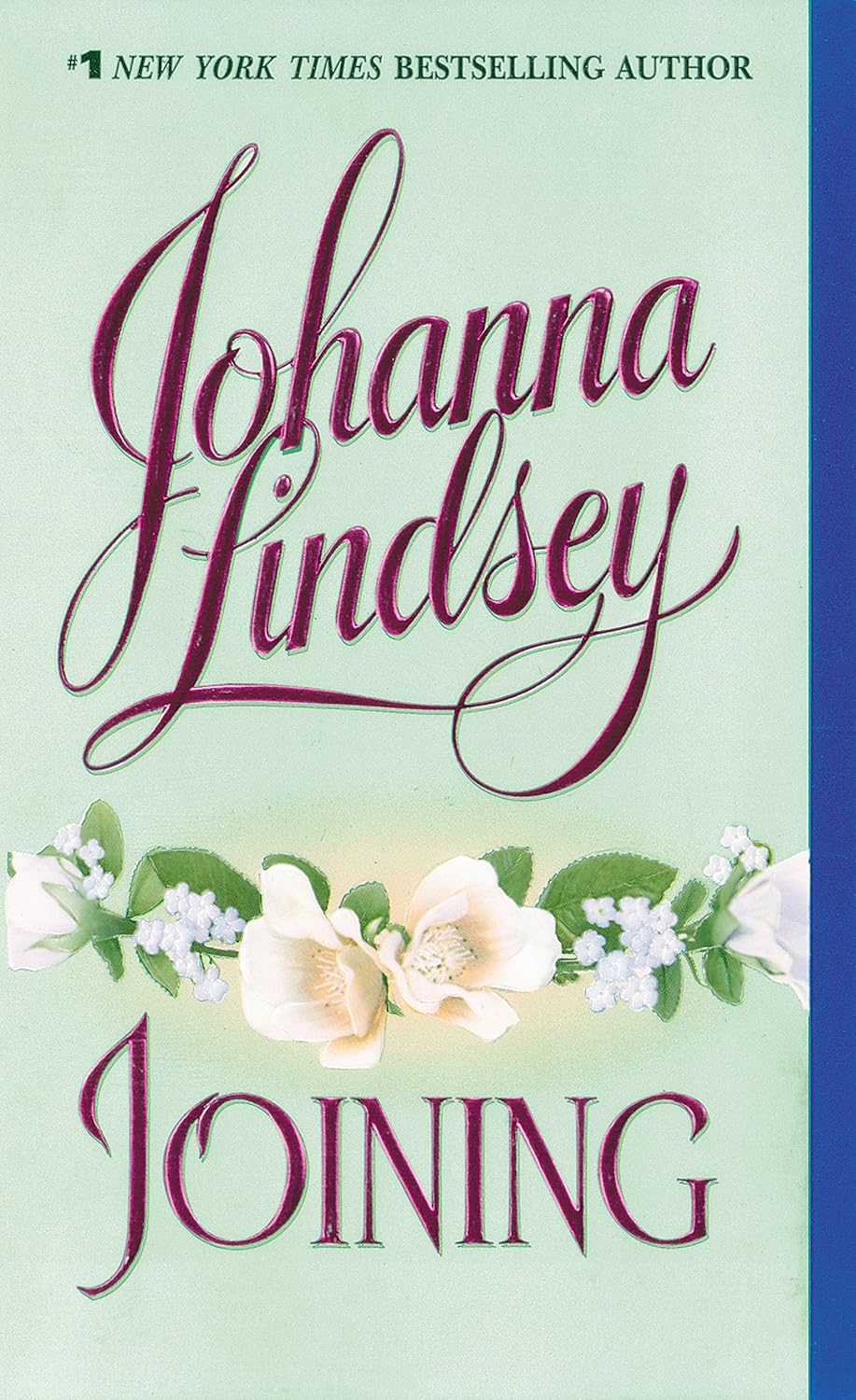
On her old paperback releases, the slogan reads, “Everyone loves a Lindsey.” Well, I used to, too, until she started churning out disappointment after disappointment. My breaking point came with last year’s holiday release, The Present, which I found utterly lackluster and uninspired. Never again, I vowed, putting her on the Forbidden-Authors Index. But then I saw Joining, and I succumbed to my addict’s personality – just one more hit, no matter how poor it may be. Aah – it was like a junkie finding a really strong batch of the good stuff. This book will give you the Lindsey fix you’ve been waiting for.
Milisant Crispin has been betrothed to Wulfric de Thorpe since infancy. The only problem is that she despises him, even though they’ve only met once in their lives, when she was eight years old and he shoved her so hard she broke her ankle; he also killed one of her pets. She’s a real tomboy and has grown into the son her father never had. She doesn’t want to give up the life she knows for a future she’s not sure of, with a man she detests.
Wulfric’s only memory of Milisant is no more endearing. What he remembers is a pushy little girl who sicced her vicious falcon on him, so that he had to kill the thing in self-defense. Since that time, he’s found another girl to marry, but his father refuses to break the contract – the de Thorpes need Milisant’s dowry to restore their family fortunes. Furious, Wulf goes off to Dunburh Castle and encounters a stunningly lovely young woman under attack from a band of brigands. He and his entourage fight off the bandits and it’s then that he finds out the young vision is not Milisant, but her twin sister Jhone. Milisant’s the scrawny-looking thing he’d mistaken for a boy. Why would anyone want to kill her? And why does he have to marry her?
OK, so call it The Taming of the Shrew, a la Lindsey. Yes, the plot is silly; yes, the villain is transparently obvious from page one; yes, you do have to suffer through some pretty cumbersome fake-medieval dialogue. But this story worked for me. I liked the characters, all of them, from Wulf and Milisant (although I do confess I liked her sister better, even though Jhone’s saddled with a ridiculous name), to their fathers, to all the background serfs and villeins, and, yes, even the villain. Ranulf and Reina FitzHugh, from Defy Not the Heart, my favorite Lindsey medieval, even make a cameo appearance.
While the phrasing of some of the dialogue strikes me as kind of cheesy, what it does in moving the story forward doesn’t. When she’s on, Lindsey writes some of the best, most effective dialogue around. The feel for the medieval era is spot-on, as well: from the persistent chill of a great hall to the pungent odor of the stables, it’s all there. She does have one stylistic quirk that has always driven me nuts, and it’s evident here in full force. Here’s an example: “He started to argue further, had his mouth open to do so, but obviously changed his mind.” It’s that cramming of one sentence into the middle of another that happened way too often and proved the only real distraction in this whole book.
Joining restores my faith in Johanna Lindsey’s abilities as a storyteller. Her medievals have been some of her best work. In spite of my fondness for the earlier entries in the Malory/Anderson series, perhaps she should just stick to this era. When it comes to medieval romances, everybody – especially yours truly – loves a Lindsey.
Recent Comments