
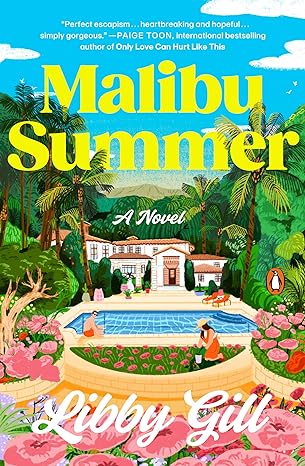
Malibu Summer
Malibu Summer is a touching outing that sensitively explores the reality of mourning, grief, and new love. A few things prevent this from being a DIK, but the book is a richly explored, tender meditation on how grief can change everything.
Environmental scientist Ivy Bauer is brilliant and headed for great things – and in deep mourning. Her husband, Will, has been killed in a traffic accident and she completely blames herself for it. Will had been rushing to meet her for a mid-day assignation so they could begin the conception process; in a hurry, he ran a red light on his bike and was broadsided. All she can hear in her head are the last words she said to him, demanding he grow up and be serious if they want to have a child.
One-time hotshot actor, Conrad Reed, is a widower mourning the death of his wife, Dawn Delaney, an actress whose sudden death in a car accident has turned her into a James Dean-esque legend. Conrad labors in her shadow while trying to raise his stepson, preschooler Hudson. Everything is rotting in Conrad’s life, from the massive estate he and Dawn bought to his moribund career, which may or may not be resurrected by a television procedural show. Since his box office hopes were killed via a political movie which took him too far abroad from his beloved roles as honest cops and soldiers, anything traditional looks like a great boon.
Ivy, eager to get away from her guilt over Will’s death, accepts her friend Mak’s invitation to move to SoCal for the summer and manage everything remotely so she can get herself together, and Conrad, who’s also friends with Mak, agrees to allow Ivy to live in the gardener’s cottage on his land and ultimately hires her to use her revolutionary irrigation system to fix the estate’s foundering gardens. They clash immediately as Ivy tries to make changes to the gardens that minimize Dawn’s influence over the place, including replacing her Shakespearian garden with native California grasses, which doesn’t go down at all well with the grieving widower. But bit by bit, these two grief-stricken souls become friends, then lovers. But with so many obstacles in their way, can they find the grace to forgive themselves for the past and open up to new love?
There’s a lot of really good stuff in Malibu Summer, and initially the author does a fine job of balancing the tough stuff of grief with the joys of getting to know a new person – and the hope of a new life. But the last fourth of the book takes a turn toward the melodramatic and bathetic, sinking all the hard work the book does to get here.
I loved that Will and Dawn don’t stop existing for Conrad and Ivy, even as they fall in love and make a new family. I loved Conrad’s realistic struggle between the kind of art he wants to make and the kind of art that pays the bills. I liked Mak’s presence in the story, and generally that of friends JP and Fernanda, though I have no idea why they were given PoV chapters because they simply aren’t needed. Hudson is a decent kid, though sometimes he comes off older than his young years. Those last two things, together with the aforementioned bathos and melodrama, combined to bring my final grade for this one down to a B.
Yet the realistic portrait of grief and the slow-burning forbidden romance between Conrad and Ivy really works, making Malibu Summer an imperfect but worthy read.
Recent Comments




I enjoyed your review and learned a new word (bathetic/bathos) so that’s a win! Thanks!
Thank you!