

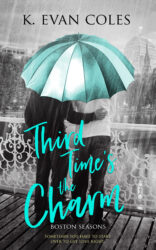
Mr Collins in Love
I have to say that I approached Mr. Collins in Love with some degree of trepidation, because I’m not a fan of retellings, reimaginings or ‘variations’ (the market is awash with P&P ‘variations’ – Darcy is a pirate and Elizabeth his captive! (or vice versa), Elizabeth never went to Pemberley and is now a downtrodden lady’s companion! Darcy and Elizabeth are compromised into marriage! – you get the idea.) But this is one of those times where I trusted the author more than I disliked the idea – and was intrugiued as to how Lee Welch was going to fashion a romance around a character who is, let’s face it, one of the most disliked and ridiculed figures in classic literature.
The answer to that question turned out to be ‘very skilfully’. This story doesn’t diverge from canon – Mr. Collins still owes his living to the obnoxious Lady Catherine de Bourgh, he still proposes to (and is rejected by) Elizabeth Bennett and then proposes to Charlotte Lucas with more success – but the character himself is presented in a much kinder and more generous light while still recognisably being the rather obsequious country parson we know from Pride and Prejudice.
The story begins a few months before the Bingleys arrive at Netherfield, with Mr. Collins, fairly recently installed at Hunsford parsonage, taking tea with his esteemed patroness who has decided that, as he is now in possession of a good living, he must be in want of a wife. Mr. Collins may only have been at Hunsford for a short while, but he has the measure of Lady Catherine and knows that whatever his own opinion on the matter (which is that he doesn’t much care for the idea of being married), there is zero possibility that she will allow him to follow his own inclinations, ergo, he will have to look about him for a suitable match.
He is pondering the issue, busily calling to mind the names of the marriagable young ladies of his acquaintance as he makes his way back to the parsonage, worrying about whether a wife will want to make changes to the house he has grown to love, or the staff he is comfortable with, and even with himself and his habits, when his housekeeper bustles up to him and tells him that there’s been a stranger, a large, raggedy-looking man, lurking about in the lane all afternoon who is surely up to no good. Not too alarmed, Collins walks back to the lane, but doesn’t see anyone there; he is reassuring his servant that the fellow has gone when her expression changes and she stares over his shoulder. Collins turns to see the ruffian in question, a large man dressed in rags with scabbed knuckles, dark, heavy brows and a scruffy beard – and realises he knows him. It’s Jem Binns – his dearest (and only) childhood friend – who had run away to join the Navy after Collins – William – had been sent away to school at fifteen. They haven’t seen each other in a decade and it’s clear that time hasn’t been kind to Jem, but William is overjoyed to see him again, the one person in his life who’d truly seen and understood him.
This novella’s portrait of Mr. Collins is, as I said before, a kinder one than we’ve seen before, but he’s still essentially him; socially awkward and repressed, stuffy, very concerned with appearances – so he hasn’t been given a complete personality transplant. But he’s also kind, observant and genuinely cares about helping the people he’s there to serve. Reading between the lines, his obsession with propriety, his inability to interpret social cues or understand subtext would indicate he falls somewhere on the autism spectrum, and his bestowing of lavish praise, working out those “little delicate complements” in advance are just one of the coping mechanisms he’s devised as a way of functioning in a world he doesn’t quite understand and that he doesn’t feel as though he’s in step with. The author absolutely gets into his head and shows us a man who is terrified of being seen as ‘different’ and who has spent almost every waking moment pretending to be someone else and imitating behaviour that he has learned by heart in order not to stand out or offend. It’s heartbreaking, yet shows admirable strength of character.
I really liked that we get to see William through the eyes of his parishioners and servants (via Jem), who, unlike the gentry and upper classes of P&P, think well of him and appreciate his kindness and consideration.
Jem’s reappearance in William’s life brings back memories of a simpler, happier time, and they soon settle into a comfortable routine – working together in the garden, watching the sunset, reminiscing about their younger days or just being quiet together. Their deep emotional connection comes through very strongly and their romance is sweet and gentle, full of affection and tenderness with little overtly stated, which suits the overall tone of the story.
The major secondary character in the novella is Charlotte Lucas, and I adored Lee Welch’s version of her. She seems, in P&P, to be somewhat pathetic and even desperate, but here, she’s the perfect mix of forthright and demure and we see her taking control of her life, making her own choices and deciding to make her own happiness, and I admired her for that.
The writing and language are, quite simply, superb; the story is told from William’s perspective so we’re in his head the whole time, and his inner monologue and dialogue are exactly how I’d imagine him speaking and thinking. And the descriptions of the lush countryside are wonderfully lyrical – a beautiful complement to the tender romance.
I also appreciated is the nuanced way William and Jem discuss the prospect of William making a lavender marriage; the fact they discuss it at all marks this story out as unusual in queer historical romance – and I finished the book feeling satisfied with both the realistic HEA, and in the knowledge that their arrangement will at last provide William with the home, family and love he absolutely deserves.
Mr. Collins in Love is a quiet, kind and heartwarming story, a brilliant study of a much-maligned character and a sweet, heartfelt romance. I don’t think I’ll ever see the Reverend Mr. Collins in quite the same way again.
Recent Comments




Has anyone else read “Mr. Collins’ Deception: A Pride and Prejudice Variation“ by Renata McMann? I thought it was cute. What if he’d s just pretending to be a vacuous sycophant to secure his position? He’s really smart, intelligent, and strong.IIRC the plot remains the same — we just see it from the POV of a very different Mr. Collins.
I have not. I did not even know that this series of 36 books (good grief!) even existed. Will give it a go at some point. Thanks for the suggestion.
Intrigued! Thanks for the title
Hi Caz – thank you so much for this lovely insightful review! xx Lee
You’re very welcome, Lee! It was thoughtful and lovely. <3
I was just coming here to say I’d skimmed over the author when I read the review and I just realized it was Lee Welch. I loved Salt Magic Skin Magic, and Seducing the Sorcerer. In fact I was about to do a relisten to Salt Magic. I’m definitely giving this a try. Thanks.
Hope you enjoy it. BTW, Joel Leslie is narrating the audio version, which is coming out in October.
Oh, thank you! I think I’ll wait for that, then. I really enjoyed his narrations of the two books I mentioned above.
Mended with Gold, a contemporary, is also very good. I think I only read it because that’s all there was left of the backlist, but I ended up loving it. The author’s flair for paranormal is reflected in one of the MCs drawing anthropomorphic comics and leaving some as “notes” for the other.
I like this author’s voice a lot.
Thanks for the rec!
Caz’s recommendations are always excellent. Makes you want to read the book right away!
I’ve been terribly excited to read this; it sounds great.
It’s lovely – I hope you enjoy it!
Another novel that treats Mr. Collins as worthy of love and respect is ‘The Other Bennett Sister’. The other Bennet sister is Mary Bennet, another despised character in P&P. The story begins with Mary, still unmarried, now bouncing around her various married sisters, not feeling wanted anywhere. Mr. Bennett is dead and Mr. Collins, married and father of a son, is now the resident owner of Longbourn Estate. His marital relationship with Charlotte is exactly the way it was described in the original P&P. Into this domestic arrangement, Mary comes to stay with them. Mary sees Mr. Collins very differently from Charlotte—being bookish herself she sees him as a dignified scholarly man and is much pained by the way Charlotte treats him. Collins himself is not insensitive to the way Charlotte regards him and Mary’s admiration is a balm to his bruised soul. He teaches her Latin and Greek and she listens to his challenges managing the estate. In a twist, Charlotte recognizes the threat Mary poses to her marriage, starts paying more attention to her husband, gets pregnant and subtly pushes Mary out of her home. Mary’s journey takes her to her uncle Gardiner and there she finds her Mr. Right.
The Other Bennett Sister by Janice Hadlow is a lovely sensitive corrective to the way Mary Bennett and Collins are treated in P&P and the passages describing the missed opportunities and regrets are the most poignant in the book.