
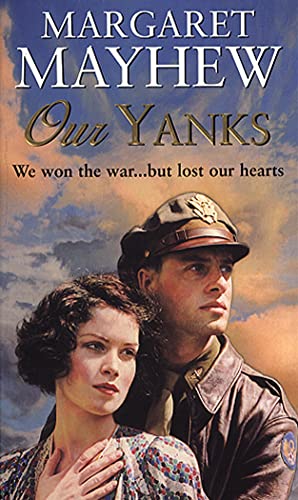
Our Yanks
Our Yanks is subtitled A Love Story, but it can’t be considered a romance. Instead it is the story of one small English village and how it reacted when U. S. troops come to stay during World War II. It’s a story about a place and its people during a difficult, trying time.
In the summer of 1943, King’s Thorpe village in Northamptonshire, England receives some unwanted guests. Due to the proximity of an RAF station, King’s Thorpe has the dubious honor of playing host to U. S. troops. American soldiers suddenly outnumber the inhabitants of the tiny hamlet, and some of the villagers don’t take kindly to it. A few worry about their daughter’s virtue; others complain about the noise and the terrible lack of Yankee manners. But some, especially the children and the young women, find the soldiers fascinating, and can’t get enough of all things American. There are a number of stories at play here: the lonely, overburdened vicar and his young daughter; the widowed lady of the village who, against her will, finds the American commanding officer personally compelling; the status-conscious baker who is certain that the Yanks will ruin his flirtatious daughter; and the young boy who loves the fighter planes and comes to love one particular fighter pilot even more.
Mayhew does not romanticize war. The fighting grinds on, and some of the soldiers die. Most of the villagers eventually warm to the Yanks, but some remain determined to dislike them. A few characters do ugly, selfish things because they are small-hearted or immature. There are no easy answers, and even for those characters that get their happy endings, things remain uncertain. The book ends before the war ends, and everyone involved knows the consequences of war. So readers who need the HEA, be warned.
But for those who like village stories, this book should have a lot of appeal. Mayhew makes her characters very human and, for the most part, likable. The Americans especially come across as gallant, generous, and charming, if sometimes a bit gauche. There were a number of touching romantic moments too. Many of the local girls think the soldiers irresistible, and the Yanks are happy to make their acquaintance. The dialogue sparkled in some of the most unlikely places.
Perhaps the best aspect of the book was its contrasting of American and English social customs and manners. The English think the Yanks are strange and undercivilized. The Americans think the Brits are stodgy and overly concerned with unimportant details – especially in a time of war. It was a fascinating, though small scale, comparison of cultural differences. And watching both sides come to a better understanding of each other was moving.
Also for those interested in World War II history, Our Yanks capably showcases the social aspects of the war. We see bits of the fighting from the soldiers’ perspective, but much more of the everyday difficulties the villagers face: rationing, working extra to make ends meet, clinging to normalcy with only the meagerest of tools. The courage it took to try to survive and beat the Nazis comes across very clearly.
The only downside to the story is that since it’s about a town, there’s somewhat of a lack of intimacy with the characters. Most of them are interesting, and some of them are quite delightful, but with the exception of young Tom Hazlet, who’s under ten, we don’t get to know them mind, body, and soul. I can’t say that I wept bitterly for those characters that did not get their happy endings. I was conscious of the tragedy of war, but I felt it from a distance.
I would not recommend Our Yanks to those readers who need a romance, but for those who like small town stories or historical fiction about an important time some can still remember, this book would do very well.
Recent Comments

