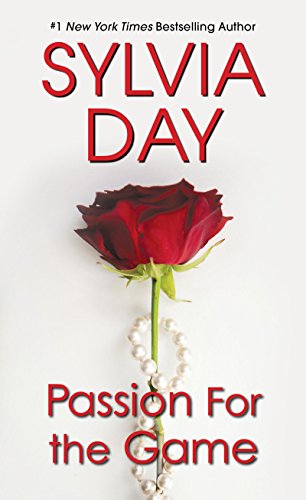
Passion for the Game
I read Passion for the Game because I really needed to review something different. My last several reads (for review and otherwise) have been complete duds, and I was ready to try almost anything that seemed novel. A Georgian historical with burning-level sensuality seemed to fit the bill. While it didn’t end up as a book I could truly recommend, it was a pleasant, different sort of read that more or less worked for me.
Maria, Lady Winter, is a woman of scandalous reputation. She’s outlived two husbands, both of whom died under mysterious circumstances. What few people know, however, is that she is very much under her step-father’s thumb. The instigator of both her marriages, her stepfather (Lord Welton) is secretly holding Maria’s younger sister Amelia while he steadily gambles away the proceeds from Maria’s advantageous marriages. He constantly threatens to sell Amelia into slavery or worse if Maria doesn’t do exactly what he says. Privately, she has been searching for Amelia on her own, but each lead peters out before she can manage to locate her sister. As the book begins, Welton charges Maria with the task of uncovering information about Christopher St. John, a notorious pirate who has recently been freed from prison – possibly through nefarious means.
Coincidentally, Christopher is on a similar mission. A government spy has told him that he needs to get close to Maria and discover whether she killed both her husbands. If Christopher can implicate her in a crime, the agency will drop the charges against him.
Neither Christopher nor Maria expect to feel and immediate sexual attraction. Though neither is opposed to using sex as a means to an end, they are taken aback by the tremendous sexual hunger they share. Eventually, it deepens into more, and they develop feelings for each other. Naturally, they both have trust issues; each has a compelling reason to turn in the other. Maria hopes that sharing information about Christopher will get her one step closer to discovering Amelia’s whereabouts. Christopher wants to live without a death sentence hanging over his head. Both of them are pursued by various interested parties, each of whom wants to use Christopher and Maria for their own gain.
Parts of this book worked really well. I enjoyed all the intrigue, and found the conflict fairly believable. When betrayals occur, they make sense given the enormity of what’s at stake. Indeed, the “high stakes” quality of the conflict makes both the sexual tension and the eventual happy ending more meaningful. As I read the book, I couldn’t help thinking of it as a Georgian Era version of the movie The Departed (though the ending is much happier).
I had mixed feelings about the sex in the book. On one hand, both characters had an openness about sexuality that was a real breath of fresh air. Maria refuses to apologize for enjoying sex. She even lives with a former paramour. Though Simon’s now just a trusted friend, they clearly shared a past, and Maria doesn’t wring her hands over it. Christopher doesn’t exactly pussyfoot around either, and because they are both so experienced, their quick tumble into bed actually makes sense. The sex scenes themselves are both well-written and erotic. They are very frank, though, and definitely not for the profanity-averse. That also leads to my main reservation about them. At times, the frank language came across as anachronistic. The words Christopher uses would shock many women today, and I had a hard time believing that a man of that time would say them out loud to a woman – unless she was a prostitute. Had he merely thought them, it would have felt more in step with the times. Frequent erotica and romantica readers might not even bat an eye, but whenever Christopher rhapsodized to Maria about her exquisite c_nt, it pulled me out of the story.
My other issue was that when I closed the book, I wasn’t really sure I knew who Christopher and Maria were. I got that they loved each other, and enjoyed f_cking each other. That came through loud and clear, as did their original motivations for seeking each other out in the first place. But after the dust settled, I wasn’t really sure where their relationship was going, what they’d be talking about, or even what professions they planned to pursue. The lack of characterization basically pushed the book to a C+ read for me.
That said, it’s not a bad read, and I would certainly try another book by Day in the future. Though Passion for the Game had its flaws, it also seemed refreshingly different from many historical romances on the shelves today; I’d consider that a significant mark in its favor.
Recent Comments