TBR Challenge – The Witch Finder
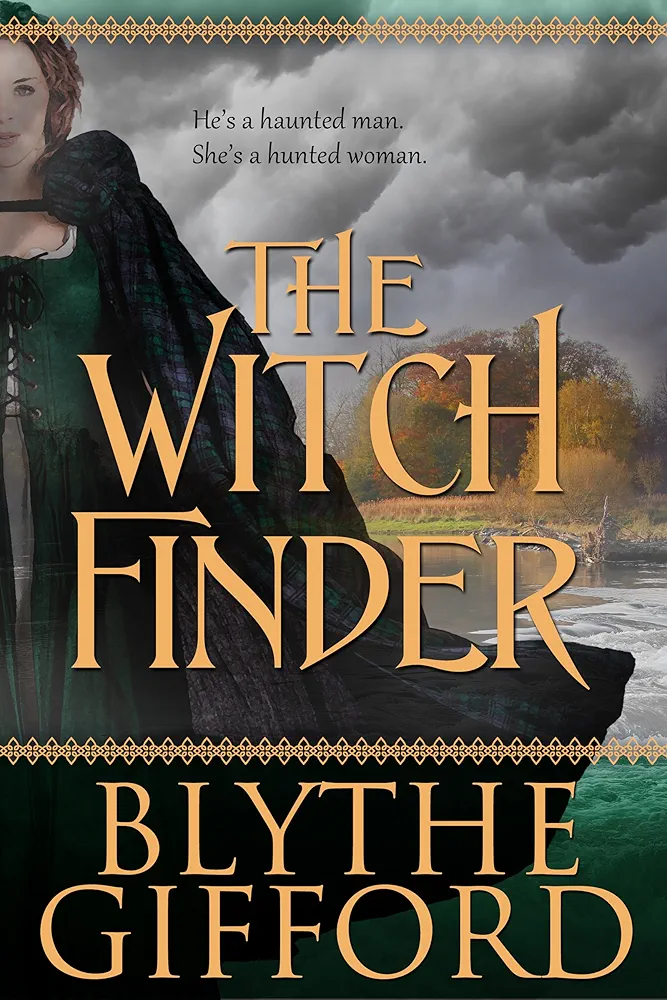
With Halloween coming up, this month’s TBR Challenge theme is “Spooky (Gothic)”. I tried a couple of old gothics from my TBR, but neither of them stuck. So, I went in the direction of a darker-than-usual historical novel from an author whose historical romances I’ve enjoyed in the past. In a way, I would definitely call Blythe Gifford’s 2013 novel The Witch Finder spooky (and it is set in the days leading up to All Hallows Eve), but the scary moments in this book come from the realization of just how brutally a community can turn against someone rather than from anything supernatural.
Set in 1661 along the Scottish borders, this tale takes readers right into the thick of Scotland’s witch hunts and to the small village of Kirktoun, which has allegedly been set upon by a witch. The local blacksmith has lost a cow under what he sees as suspicious circumstances, and the local earl’s daughter grows ever more afflicted by what her father believes are supernatural torments. Under pressure from the earl, Reverend Dickson has sent out a call for a witch finder to come to Kirktoun and investigate.
Alexander Kincaid comes to the village and presents himself to Dickson as the witch finder. Upon his arrival, he soon crosses paths with Margret Reid and finds himself unsettled. He is told that Margret Reid is a widow from Glasgow who lives alone in a cottage just outside of the town. Though she reputedly keeps to herself and is fairly unremarkable, Alexander keeps finding his attention drawn to her as his investigation unfolds.
Needless to say, Margret finds Alexander’s scrutiny uncomfortable – in that time and place, any rational person would want to avoid the attention of a witch finder. However, Margret also carries plenty of secrets. For starters, she doesn’t live alone as the villagers believe. Instead she cares for her mother, a mentally ill woman driven deeper into illness by witch hunters in her past.
The author sets up the tension in her story very well and the characters’ backstories have obviously been crafted with care. Margret may be secretive, but she certainly has reasons for being so. Kirktoun is a hiding place for her, and her desire to keep her mother safe drives many of her actions.
Ms. Gifford makes a good choice in portraying Alexander as a witch finder who is working his first solo case. His beliefs haven’t hardened as have those of his mentor, and he comes to realize the role that misogyny, local politics and quarrels play in some of the accusations floating around him. Also, since Alexander is new to his trade, he is someone many readers would see as having more room to change his path and redeem himself because he isn’t walking around with the blood of innocents on his hands – something that cannot be said for others we encounter in the story.
On the one hand, the characters’ belief in witchcraft can feel alien to a modern reader, but the author does a good job of bringing readers into the characters’ worldview. After all, not only did the seventeenth century church in Scotland have a great deal more authority than its modern day counterpart, but more people believed in witches and other supernatural forces. That belief system carries through into this novel. We see characters such as Alexander or Reverend Dickson examining events in the village rationally, but also being unquestioning in their belief that evil forces could be at work. And even Margret would likely acknowledge the existence of witches, even as she vehemently denies that she and her mother have any connection to them.
As one can probably tell, this book carries more heaviness and darkness than most historicals I’ve read. Ms. Gifford’s sometimes spare and understated style lends itself well to the dark and sometimes bleak mood of this story. Therein lies one of the biggest challenges with this book. As historical fiction, The Witch Finder is excellent. However, the romance does sometimes feel overwhelmed by the darkness of the story.
On the one hand, I could believe in Alexander and Margret’s attraction and growing respect for one another. However, both of them have been through horrible things, and we see even more horrific events unfolding on page, as they grapple with the impact of the witch hunt and growing suspicion in Kirktoun, and as Margret desperately tries to protect her mother. The misogyny inherent in the witch hunts comes out on page, as does some of the torture these women were subjected to. Against such a setting, it’s almost impossible to leap into a truly satisfying happy ending. Even though Alexander grows over the course of the novel, I still had trouble believing Margret would forgive and trust him so quickly. For that reason, while I often found this book both compelling and unsettling reading, I did have some issues with the ending. However, even with that quibble, the novel is well done .
Recent Comments