Light from a Distant Star
Novels about young southern girls coming of age have abounded since Harper Lee wrote the brilliant To Kill a Mockingbird. Most of them fall far short of that masterpiece simply because it is nearly impossible to create a narrator as outstanding as Scout. This novel sort of turns the idea of the narrator on its head. Instead it approaches the question from a different point of view and leaves us wondering as we close the novel whether justice has truly been done.
Nellie Peck is at an absurd disadvantage in life. Her families dysfunctional nature is starting to cause rips and tears in her idyllic childhood view of the world. Ruth, her eldest sister, is on a search for her birth father. Nellie’s own father Benjamin refuses to do anything but write a comprehensive history of their small town, something that only he is interested in. Mom Sandy is working at a beauty parlor but is just now starting to develop her clientele. Ends are barely meeting and luxuries like TVs and cell phones are a pipe dream. Nellie is looking at a summer babysitting her younger brother Henry, a boy who is odd, picked on, and annoying in the small ways only a sibling can be.
Then a tenant moves into the dilapidated little apartment the Pecks have added to their home. Dolly, a stripper, is just about the most fascinating person Nellie has ever encountered. That is, next to Max, the ex con who is working at the junkyard with her grandpa. And Bucky, the new bully in the neighborhood. But unbeknown to Nellie, Dolly is more than just a little girl lost – she is the catalyst that will change all their lives forever.
As the novel begins, Nellie is escorting her brother home from school when they stop at her grandpa’s junkyard. Charlie is a cold, dishonest, and uncaring man, but Nellie is desperate to ditch Jessica, the girl walking home with them. While rummaging for supplies for a tree house they plan to build, Nellie and Henry suddenly find themselves attacked by a dog. Nellie’s attempts to save her brother fail and it takes Max killing the dog to stop the attack. I should add here that he makes several efforts to get the dog to quit prior to harming it, and the animal simply won’t let go of its prey. Henry is rushed to the hospital and Nellie has found a new idol in the heroic Max.
After that exciting start to the holiday the summer settles into a fairly humdrum routine. Nellie hangs out with Dolly when able to get out from under her mother’s eye (which is often), helps Henry build his tree house, and unabashedly eavesdrops on Dolly whenever the opportunity presents itself. She and Henry get dragged into some dirty business with Bucky and find themselves having to extricate themselves at considerable danger. The days are long and hot, the problems surrounding their family many, and when tragedy strikes, it is like the long awaited storm that gives substance to the tension that had been lingering in the air all along.
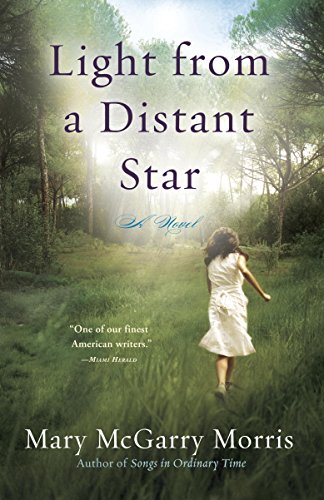
Read on the surface this slow moving tale is about a thirteen year old girl who has an overworked mother, a father who takes underachiever to a new and desolate low, and a myriad of other selfish dysfunctional people who live in a small Southern town. It is no wonder that Nellie seems to shine like a star in terms of being bright and observant( as the cover blurb tells us) when she is compared to this mess of humanity.
But read on the surface this novel simply doesn’t work. It does a terrible job of giving us a good setting, trying to combine the 50’s and 60’s in the South with the modern era of cell phones, air conditioned malls and video games. Even Bucky, the bad boy of the bunch, reminded of nothing so much as a 1950’s punk who hadn’t been touched by the terrible, dangerous crimes of which youth are capable of today. And he should have been, given his background. Also missing are the social programs available to families like Nellie’s, programs through the school that would keep the kids occupied, programs through churches and other organizations that offer free summer camps or other activities. And I had trouble accepting that parents who could afford to go out for a night on the town with friends lacked the funds to go to Walmart for a television.
What is important here is what is happening under the surface. We are getting to know all the players that will surround the tragedy. And more, we are getting to know Nellie, our star witness. Through Nellie’s interaction with Dolly and Ruth, we see someone who is a bit sneaky. Sure, in a juvenile way, but in a way that a thirteen year old most assuredly knows is wrong. We learn that Nellie likes playing God in petty ways, fiddling with things to keep her little world intact. We learn that Nellie rarely behaves simply to avoid prison – not because she cares about doing the right thing. When she gets caught up with Bucky’s scheme she doesn’t mourn for the people she hurt but fears for herself and Henry. Nellie has few friends or confidants; she is alone a great deal. She has a strong protective instinct for those she cares about, but she is close to no one. When she does make friends, her character judgement is iffy. On the flip side we know that Nellie feels for the oppressed. She stands up for the underdog. She may do wrong but she comes clean when she realizes she needs to. She’s a good student and a hard worker We know that she wants most of all for her family to be happy and functional and she works towards that end in good and bad ways.
We take all that knowledge in with us to the trial, as we once more watch Nellie show some questionable judgement. In her mind she is doing it for a good cause. But for the reader it simply brings up the overall question, what should I believe? On the one hand Nellie’s view point makes logical sense. On the other, we are dealing with a not very reliable source. There is evidence for her point of view – and there is evidence enough for the opposing view as well. The book ends with the question – “How can you be so sure?”. My response is that we can’t be. And that is the genius here – it exposes to us our own vulnerabilities. It forces us to ask some tough questions about eye witness accounts and just what “guilty” means.
If you like slow, in depth character studies that can be uncomfortable at times, then I would recommend this novel. It is a candid snapshot of life’s good, bad, and middle ground.
Recent Comments