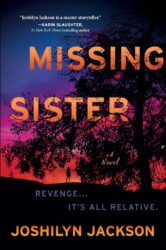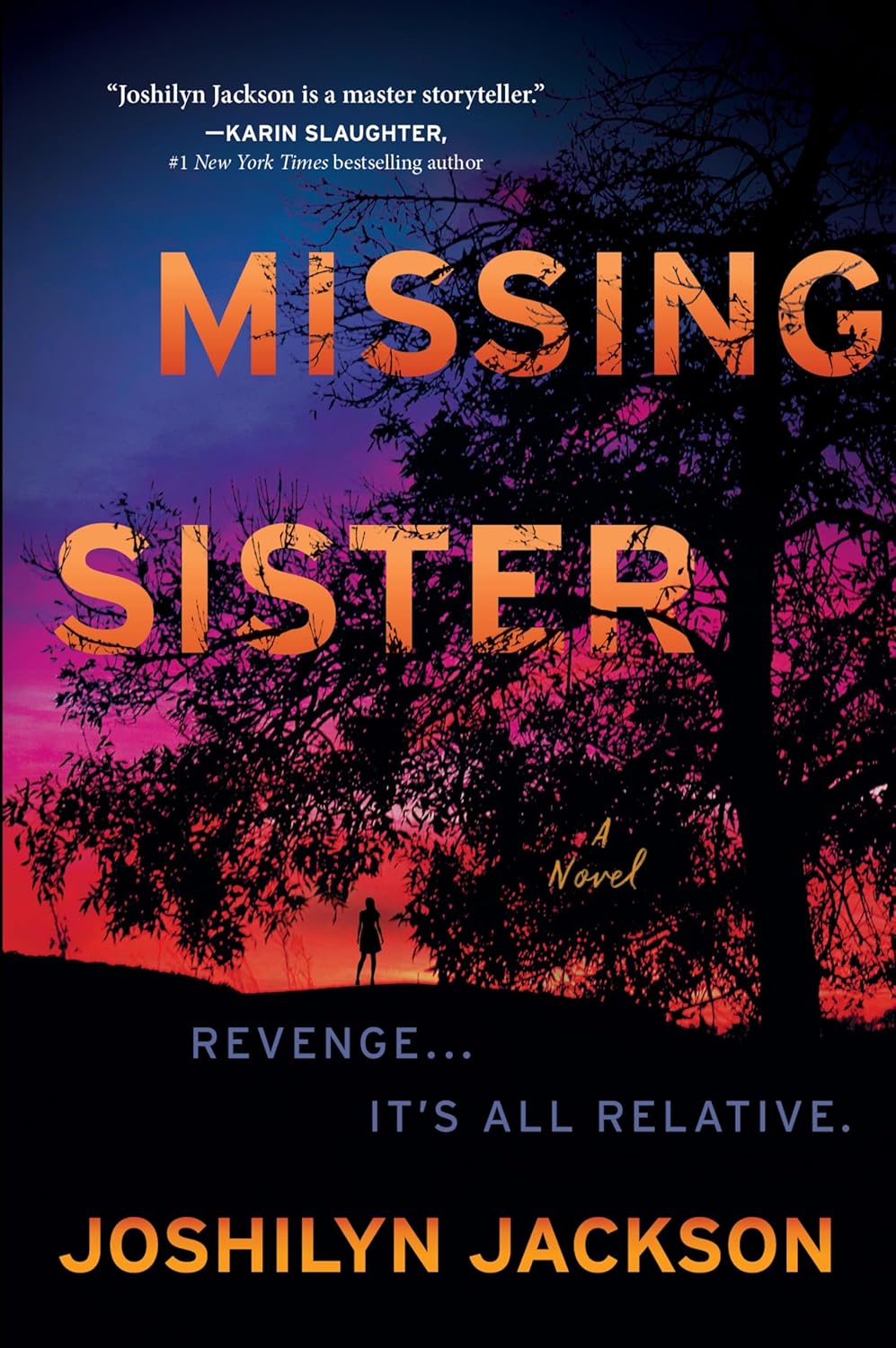
Missing Sister
The old saying “You don’t know what you’ve got till it’s gone” doesn’t fit Missing Sister. Penny knew exactly how much she valued what she had, which made losing it all the more painful.
Penny and Nix Albright were born only three minutes apart. Exceptionally close, the twins had shared almost everything as children, but as adults, their distinct personalities began to pull them in different directions. The vivacious, clever Nix went to college, planning to become the kind of politician who changes the world. The quiet, domestic Penny stayed home. She planned to finish culinary school, marry her high school sweetheart, and live in the apartment above her parents’ garage.
Neither of them ever saw their dreams fulfilled. Nix winds up dead. A horrific event drove her to drug addiction, and those drugs took her life. Right before she passes, she reaches out to her twin. Penny misses that call and now blames herself for Nix’s demise. If they had had a conversation, rather than Nix leaving a garbled, nearly indecipherable plea for help, would Penny have been able to save her life?
Five years later, Penny has broken up with her fiancé, quit culinary school, and is a rookie cop. She’s always had strong senses – keen eyesight, a sensitive sense of smell, acute hearing – and a skill for picking up details others miss. She’s close to finishing her training, and her sensory skill set has her crushing it on the streets. She’s determined to fight for justice and make the world a safer place – or so she thinks. Being called to her first murder scene with her mentor/partner, Delilah, has her questioning her every reason for wanting the position. When she sees the victim, she finds herself strangely delighted by his violent death. He’s one of three men she’s long blamed for Nix’s spiral into drugs.
When Penny is sent from the immediate vicinity to put crime-scene tape around the shopping center where he was killed, she follows the scent of vape smoke to a blonde in blood-drenched clothes gripping a box cutter. From the start, Penny is reluctant to follow protocol and arrest her. For one thing, it’s clear the woman has been abused – she has a purple line of hand-shaped bruises across her throat. For another, she had the courage and strength to do what Penny and Nix hadn’t: kill a man who needed killing. Then the woman says the one word that ensures Penny will let her walk away. Sisters.
Penny is convinced this dangerous lady is avenging Nix’s death. She tells her to run when she hears other cops coming, then picks up the box cutter and hides it. Penny has every intention of using what little she gathers at the crime scene to hunt down the killer. She just doesn’t plan to arrest the woman. She wants to join her.
For those who haven’t figured it out by now, I’ll add some trigger warnings. This book deals with gang rape, drug use, and vigilante killings. We are not provided with gory details, but the issues drive the plot and are discussed frequently throughout the novel.
What makes a suspense story readable is the author’s ability to engage the reader with the mystery, and Ms. Jackson does just that. She expertly doles out perfectly paced breadcrumbs, making us anxious to figure the puzzle out for ourselves. Her smooth, emotive prose gives us an addictive noir-style narrative that juxtaposes everyday, middle-class moments with dark, dangerous ones.
The author also does a nice job of putting ‘domestic’ at the forefront of this domestic thriller. It’s not just that the mystery revolves around family, but that the family is so warmly enmeshed that everything they do includes them all. Living at home in that small apartment means her brother, Gand, parents, and teenage niece Shadow are affected by every move Penny makes. There is also very little privacy, so it is hard to keep secrets. Shadow feels free to breeze in and out of Penny’s private space, and Penny is privy to pretty much every move Gand makes. The strength of this entanglement is that it helps us understand just why Nix’s death was so impactful. Nix’s absence is felt on almost every page.
But while very readable, the story has serious believability issues. Penny’s loving, caring parents are essentially caricatures, spending most of the novel in the background and only showing up when we need assurance that there are responsible, kindly adults on the scene. Gand is a stock presentation of a carefree hippie who encounters exactly the kind of struggles and espouses exactly the kind of opinions one would expect him to. His messy mix of sage, wise adult, and irresponsible man-child feels like a plot convenience. Shadow is a walking, talking deus-ex-machina, providing ridiculous solutions to apparently insoluble difficulties. A hacker with apparently limitless abilities, she comes in handy when Penny goes rogue during this investigation.
Penny herself is difficult to accept. On the one hand, she is meant to be terrific cop material. We see her handle a domestic abuse case with consummate skill, and her mentor Delilah praises Penny’s every move, claiming she has what it takes to be great. On the other hand, there are moments when Penny is so cluelessly naive and stupid, blabbing about case points and not paying attention to evidence right in front of her, that I would have slammed the book shut if I’d had a physical copy rather than a digital one. Her lack of respect for the law and her easy decision to go rogue were big red flags to me about her suitability to be a police officer. Penny also lacks the necessary skills for her role as an avenger.
Fortunately (?), Thalia, our vigilante with a box cutter, does have them. That’s because she is essentially a Wonder Woman character whose entire existence is so mythological as to be laughable. Her backstory is ludicrous, her actions are unhinged, and her morals are nonexistent. The combination of her, the nescient Penny, the convenient Shadow, and the inconsistent Gand is too much for the story to bear. It becomes one big batch of completely ridiculous.
Ms. Jackson gets full points for making Missing Sister such a compulsive read though. Wondering how she would bring this craziness to a conclusion kept me turning the pages. The pacing was good enough that I never felt bored, and the mystery around the identity of the ultimate villain was just mysterious enough to keep me engaged with the tale. But I struggled with all the overly convenient plot points and over-the-top characters once I was finished. A bit like heartburn after an overly rich meal, this thriller leaves a feeling of undigestible surplus once you’re done. If you don’t mind a ‘What the heck was that?’ feeling at the end of a read, and you enjoy domestic thrillers, definitely pick this one up. It’s a bit of a mess, but you’ll have a lot of fun along the way. Otherwise, give it a miss.
Recent Comments