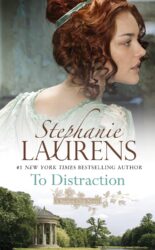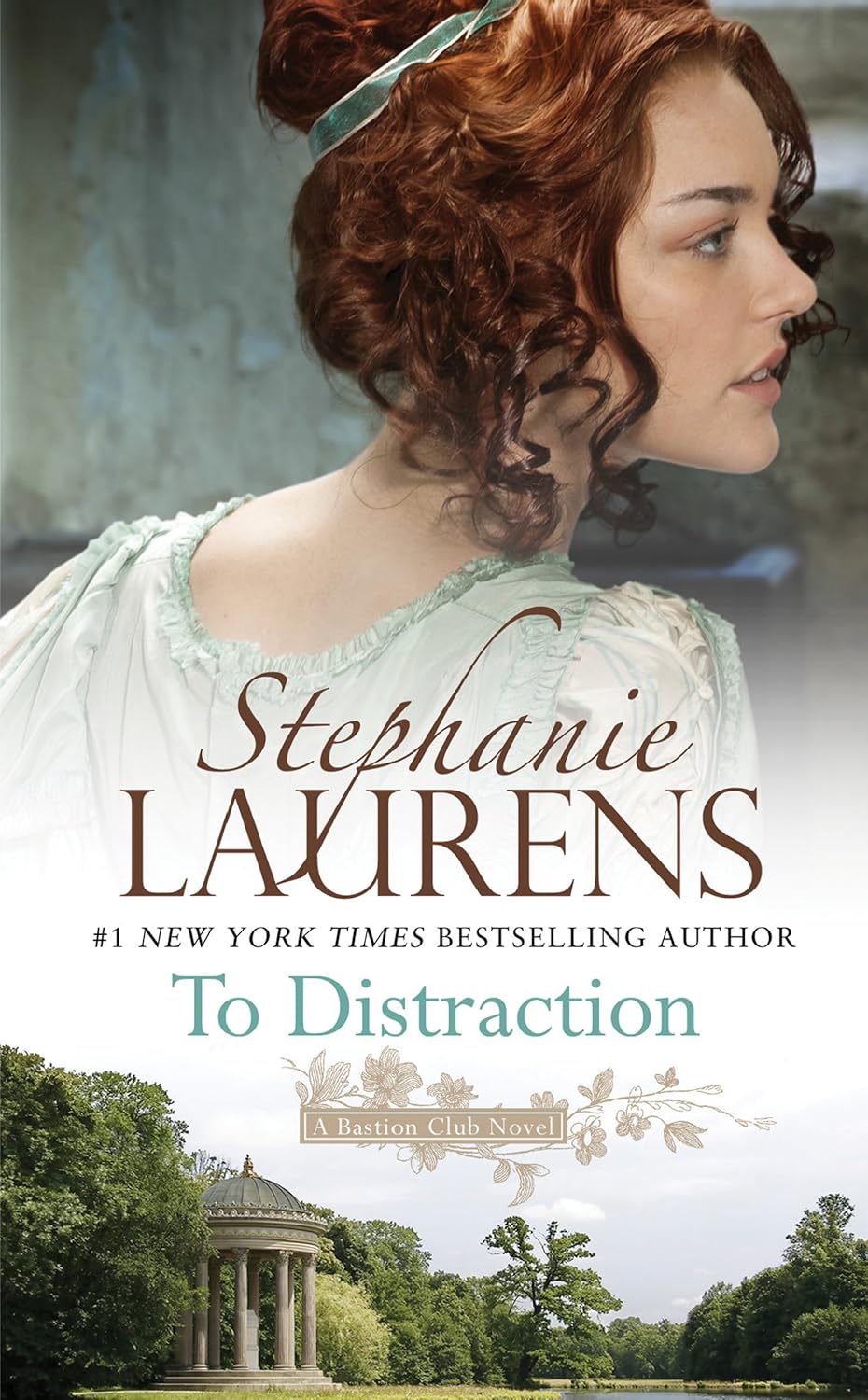
To Distraction
There has been a lot of talk this year about the “Avonization” of romance novels. When people say that, the first author who usually comes to mind, for me, is Stephanie Laurens. Since To Distraction is her 20th book for Avon, perhaps it’s no wonder that for me they’ve become almost synonymous…but no longer in a good way.
When I started reading romance novels, I felt like I could count on Stephanie Laurens as a marker of a good read. These days, reading her books is kind of like going to McDonalds; you know what you’re going to get. Once you’ve read a few, you’ve read them all. It’s a shame really because I can recall a time when I quite enjoyed her books, notably Scandal’s Bride. It’s been a long time, though, since I’ve read a Stephanie Laurens’ and felt much of any emotion at all. Her books aren’t wall-bangers, but neither do they come close to being keepers anymore, and this latest is no exception.
Deverell, Viscount Paignton, (Really, what ever happened to a good old-fashioned name like Ernest? Or William?), has decided that the time must come for him to marry. He has responsibilities and must sire an heir. With his aunt’s help, he decides that the perfect woman for him is Phoebe Malleson. Phoebe is a young lady of independent means with a bevy of her own aunts who dote on her. At the ripe old age of 25, she spends most of her time avoiding fortune hunters and attending house parties with her many aunts.
Deverell attends one of these parties with the sole purpose of meeting Phoebe. When he does meet her and he sees how lovely and how intelligent she is, he decides that she is the one for him and pursues her with dogged determination. Phoebe though, is unmoved – and refuses him more than once. She covets her freedom, and has a secret cause to which she’s committed. A husband would surely try to curtail her activities. Phoebe attends house parties to discover servants who are being abused by their masters. She finds the servants new work with kinder households. Phoebe rebuffs Deverell’s advances…and then the story goes haywire, with a rather creepy undertone.
Deverell becomes quite stalkerish. In fact, if he were the villain and not the hero, one would say that he was menacingly creepy. As it is though, Phoebe decides that the best way to get Deverell to stop being obsessed with her activities and whereabouts is to…(Drumroll please, TSTL moment up next)…become his lover. Of course, in true romance hero mode, Deverell only becomes more determined to make Phoebe his wife, and he puts the watch on her 24/7 to find out what she’s up to.
In the meantime other girls are disappearing throughout the city. A gang has set up to kidnap women and force them into prostitution. They are targeting the same women Phoebe is trying to help. Phoebe and Deverell discover the existence of the other gang when one of their own rescues goes badly. Deverell enlists the help of the Bastion club – and of their reclusive leader – to help dismantle the gang of kidnappers.
Phoebe comes to realize that not only does Deverell approve of her cause, he’ll help her with it. She also now realizes that she loves him, but because she promised him strings-free sex, she’s no longer sure he wants to marry her. The conundrum is Deverell doesn’t bring up the topic of marriage because he thinks the only way he can have Phoebe is if he agrees to strings-free sex.
This book was a bit disjointed with a deathly slow beginning, TSTL heroine and creepy hero in the middle, and a rather entertaining ending. In the end though, this was just average fare with characters interchangeable from those in other Laurens’ books, and the situations were just too convenient. Deverell and Phoebe, for example, make all sorts of assumptions about the gang of kidnappers based only on the most circumstantial of evidence – how they work, what they’re doing, why they’re doing it, where their base of operations is, etc. – and because they’re the heroes, they’re magically correct. The kidnappers, meanwhile, make all sorts of similar assumptions about the other “gang” (Phoebe and Deverell) and how they operate. Their assumptions happen to be all completely incorrect because they’re the villains. I really felt that was simply lazy storytelling. All of this contributed to the very average grade I gave this book.
Recent Comments