
Wealth and Poverty in Romance
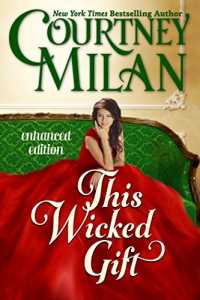 Before I started reading Courtney Milan’s This Wicked Gift, I had never picked up a romance where a character was literally counting pennies. Until then, money just hadn’t seemed very relevant to the characters in romances. When it was, perhaps the hero had to marry an heiress, or the heroine had to save her family’s business, but there was never a sense of these characters being so poor that they had to reuse tea leaves.
But Milan’s novella begins with the heroine, who runs a lending library, deciding that today she can set aside a whole six pennies from the till to add to her savings for a good Christmas meal for her family. I was completely absorbed by the dire financial straits both the heroine and the hero were in – no Cinderella romance, this one – and while both of them are in very improved circumstances at the end, Milan doesn’t shy away from the reality of poverty.
Ever since I read it, I’ve been fascinated by stories where the characters are struggling financially. One of the many heartwarming moments in LaVyrle Spencer’s Morning Glory is when the hero, who has only a few dollars to his name, buys candy for the heroine’s sons and a glass bluebird for her. This was meaningful in a way a diamond from a billionaire might not have been. That said, the escapist appeal of rich characters in romance is understandable. One of my guilty pleasures is reading lavish, luxurious descriptions of shopping sprees, fancy clothes, and fine meals, though I usually go to women’s fiction rather than romance for these. And if you don’t have to go to work, there’s that much more time to spend on building a relationship.
Still, I steer clear of billionaire romances, because ‘billionaire’ is usually short for ‘doesn’t have to put in time at the office, drives a fancy car, owns a helicopter, wears expensive suits and lives in a mansion’. I feel like I’ve read this hundreds of times already. It would be interesting to see a different take on the billionaire, such as someone who funds environmental causes, endangered animal conservation and so on.
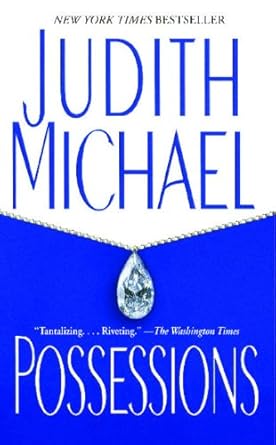 One of the outcomes I like most in riches-to-rags scenarios is when characters get creative and discover or exercise their talents. In Judith Michael’s Possessions, a sheltered housewife’s husband disappears, leaving her with lots of debts and no explanations. She becomes a jewelry designer and ends up rubbing shoulders with the rich and famous, but I always had the sense that she worked hard for this. And another interesting development for me is when characters resort to desperate measures (“If I have to lie, cheat, steal or kill, as God is my witness, I’ll never be hungry again!”). Especially sex work, though I want this to be a continuing source of conflict rather than being resolved easily because the heroine’s first ever client is the handsome hero who makes the experience wonderful and is so taken by her that he quickly suggests a permanent arrangement.
I also eat it up when money – or the lengths people will go to get it – leads them into serious difficulties. That said, this sort of plot isn’t to everyone’s tastes, and poverty can be a pretty sad or disturbing topic, especially when it crosses the line from financial problems which can be overcome to crushing, relentless destitution. Though there are still plenty of romances in which the characters are homeless (such as in Kaje Harper’s Impurrfections), which is a great example of how diverse the genre can be, and how it balances both escapism and realism.
Speaking of realism, our views on money have changed over time. You don’t see many romances with “millionaire” in the title these days. And recently, when a reader of historical fiction critiqued the start of a historical romance I’m working on, they said it was unrealistic that the heroine’s parents offered the hero a dowry of £100,000, since the Duke of Devonshire’s eldest daughter’s dowry was £30,000 and this was considered astronomical. I had no doubt that this reader knew their history, but my gut feeling is that in current historical romance, 30K wouldn’t be much, especially since my hero knew he was not getting a bargain wife-wise. In Lorraine Heath’s Just Wicked Enough, the heroine’s dowry is five million pounds upfront, with more to come in the future. Maybe the book should have been called Just Wealthy Enough.
What are your thoughts on poverty in romance (and its opposite)? Do you also find it intriguing when characters are dealing with serious financial issues? And when the hero has the biggest bank balance ever, does that increase liquidity?

There’s poor and there’s poor. Poor in the you have to keep careful track of expenses and need to save for special occasions? That’s lots of people. But poor in that you never get enough to eat, that you’re hungry all the time? That’s what poor meant for most of history, and still does in too many places. That kind of poverty is not what I want to face in my leisure reading.
I think I could start out with a character starving in a garret like Sara in A Little Princess, but this would be so depressing that I’d want to see their circumstances changing pretty quickly. I definitely couldn’t wait until the end to know that this person wouldn’t be hungry all the time.
I second the recc for Rose Lerner. KJ Charles also has some lovely lower/middle class romances, including “An Unseen Attraction” with a taxidermist and a boarding house manager.
Sometimes I like the fantasy of wealth and the absence of worry that it implies (an philanthropic wealthy MC is even better). It’s good to have both options – although if an author is going to completely untether from history, why not just make it a secondary world fantasy?
Many of KJC’s MCs are not upper class – which is great as there isn’t much HR around without Dukes and Earls as heroes! In fact, in books where aristocrats do appear, they’re generally not very nice (Lord Chingford in the Will Darling books comes to mind, as does Alex’s father in Any Old Diamonds.) So having a ducal lead in The Duke at Hazard – and a nice one at that! – stands out as unusual.
Many of Betty Neels’ stories portray the heroine in challenging economic and financial circumstances and trying to make ends meet…a lot of detail about economizing in that period of time…beans on toast! Of course the heroine is eventually saved by the doctor, millionaire, etc. When I was younger, these stories helped to encourage me to strive for a better career and economic circumstances. Although Neels’ books could be repetitive, I also always found them comforting and satisfying.
I, too, immediately thought of her novels – all those heroines living in a bedsit in a terrible location. “[C]omforting and satisfying” is a perfect description of these books. (And it is not entirely coincidental that my first European trip was to the Netherlands.)
Same CSU. First time I traveled to Europe I visited Amsterdam!!! Every 5 years or so I haul out my Neels collection and binge (I own every title in paperback). Considering my wide-ranging reading interests today, I’m a bit baffled by how Betty Neels’ books struck such a chord in my 20s. I like spicy reads too…but her books are romantic and focused on the heroine overcoming all obstacles to happiness.
I also own every title in paperback and occasionally go back and re-read. My first Harlequin novel, purchased as a teenager, was a Betty Neels and I was forever hooked.
Within the historical/Regency sub-genre, I think Carla Kelly’s wonderful books are very evocative of poverty, lower middle-class life and aspiration. As a military historian, she also did a wonderful job of depicting life in the British Army and Royal Navy. Life in the Army and Navy in the period of the Napoleonic/Peninsular War was tough, hard, mean, miserable and not financially rewarding except for those who looted or were lucky enough to have a share in naval prize money. The King’s shilling didn’t go very far!!
I really prefer my main characters to be not wealthy, like lower-middle class. Sure, the archetype — Pride and Prejudice — is about a very wealthy man being snagged by a woman of much more modest means, but I feel like everything you can say about those power dynamics have already been said, at least in romance.
My favorites are people who are working class. Not poor, one-step-away-from-prostitution-and-or-starvation plot-moppets, but doing some kind of daily trade. Maybe living month-to-month, not day-to-day.
Rose Lerner has a great one about a butler and a maid-of-all-work.
The Mischief in Mayfair series, by Grace Burrowes, focuses heavily on economics. There are a lot of minor and supporting characters who are one coin away from homelessness and starvation.Some of these characters appear in more than one book, and several eventually have better lives.
Among the major characters, the heroine of Miss Dauntless is the most impoverished main character in the series. Several plots hinge on threats to the financial well-being of various families. The novels mainly focus on upperclass main characters and the minor aristocracy.
I really enjoy a broader look at Georgian and Regency society in novels where not all the characters are tiled. The Westcott series, by Mary Balogh (Someone to Love, etc.) also mixes in some story lines about impoverished characters. I also think books that can show the gaps between rich and poor are more realistic historically, even when I am aware that these novels elide a lot of actual suffering.
Yes–I thought of Balogh when I read this blog.
When she was still publishing, Cara McKenna wrote a number of books with working-class/lower-middle-class MCs. In WILLING VICTIM/BRUTAL GAME, Laurel (despite her college degree) waits tables; Flynn works construction. In AFTER HOURS, Erin & Kelly both work at a psychiatric hospital (nurse and orderly, respectively). There are discussions about money, internal monologues about how to stretch the paycheck (Laurel refers to her fridge full of restaurant leftovers; Erin had been eating mostly rice & beans while caring for her late grandmother). I also love the way Kati Wilde incorporates the heroine’s precarious financial situation in SECRET SANTA: poverty isn’t fetishized and being poor doesn’t make the heroine morally superior, but her careful consideration of how many eggs she will need to make some cupcakes or keeping her apartment chilly to avoid a big heating bill show the toll never having had enough money can take.
IA, this is one of many reasons I miss Cara McKenna. I especially appreciate her characters who have completed college, in some case graduate programs (I’m specifically thinking of Annie from HARD TIME), and regardless find themselves in stuck, underpaid circumstances. I love romances about characters (re)discovering profound connection with another person when that’s been missing from their lives. McKenna has a way of offsetting the exploration of that spark against the struggles of recognizable daily life that somehow makes the romance more charged and resonant. I don’t think I’m describing this well, but tl;dr, I miss her very much.
Not too many people read the English author, Catherine Cookson, now. I read most of her books in the 60’s and 70’s for their depiction of working and servant class. The closest author I can name today kind of like her is Carla Kelly.
Like Kelly, Cookson often made me cry She grew up in poverty, so she knew of what she spoke. Not all of books were romances, but if you want to read about poverty in England around 1900, her books are not only unique, but I believe accurate in their portrayal.
Thanks for the rec, Lynda! I’ll keep an eye out for this author. My library has no e-copies, so I’ll have to search for some physical ones, but there’s an annual book sale in October which often has copies of older books, so maybe I’ll be lucky then.
I’ll add that I dislike rich and poor being used as shorthand for bad and good in either type of tale. A rich person is not inherently a saint or sinner; neither are poor people great just because they are poor. I’ve noticed it most in YA novels but it creeps into adult stories as well.
I’m guessing that some authors don’t want to portray poor people as seriously flawed because they’re already disadvantaged, so it feels like punching down to make them villainous in any way. But the opposite isn’t any better. One thing that really puts me off is when I know what to expect based on the characters’ race, religion, and so on, and that goes for their socioeconomic status too.
Exactly. A stereotype is a stereotype. Write nuanced characters, and I will care for them and not consider them criminal, even if they do some questionable things for good reasons. Shorthand them as vile just because they came from money, and I will fault your writing more than I will judge the character.
In most of US entertainment today being wealthy equals being evil. It’s become a lazy assumption.
And yet in Romancelandia, Billionaire=hot and desirable. Has anyone actually looked at the billionaires out there? Like 1 out of 100 fits the archetype in romance novels.
When I think billionaire, Jeff Bezos with his googly eyes or Bill Gates and Warren Buffet come to mind. In other words, not hot.
That approach toward poor or working class characters is deeply condescending and annoys me every time I come across it.
Condsecnding! Exactly!
This is another division between historical and contemporary romance for me. I have a much easier time reading (and caring) about wealthy characters in a historical setting. I’m sure this is partly related to the distance that a historical setting allows. Personally, reading about contemporary characters with extreme wealth has become intrusive, and I’ve found I can’t really engage with the story as a romance. Billionaire and finance/tech hero (and heroine tbh) romances are usually a complete no-go. I’ve had more success with stories where the wealthy character is also an artist, but even these books can sometimes lead to me distractedly musing on how impossible it is to make a living as a creative anymore without being born into or marrying wealth.
I know other readers who struggle financially are drawn to these types of books because they have the opposite response and find a source of escapism in reading about characters who don’t have to worry about money. I can understand that. I think it’s probably harder to create an immersive romance with working class characters, but when it’s done well, I find those romances and HEAs so much more satisfying.
I’d desperately like to read more romances about lower class people being happy together; journalists Clark Kenting and Lois Laning it up over stories! Rival florists! That sort of thing!
I’ve read lots of romances where counting pennies is a part of the plot and plenty where the heroine has to sacrifice her virtue to make ends meet (A Precious Jewel is the one that I remember best). I think the hardest to write with any sense of reality is the richest man in the world book. Roarke was a big reason why I quit reading the In Death saga. He could do anything, buy anything, etc. etc. It just grew old to have him running a gazillion dollar business and still have time to fight crime on the side.
Two thoughts:
1) I find that poverty is often a feature of contemporary romance. Whenever I read about yet another American student or single parent struggling with three jobs and depending on tips I feel annoyed that so many real people live in a supposed first world country with a pitiful minimum wage and no paid leave, unlike the rest of the civilised world. But then I’m not American; I guess American readers don’t find this remarkable. But as time goes on I find these books more and more depressing, especially because the authors seem to treat this financial insecurity as a fact of modern life,
2) To inflate the value of things in historical romance to keep up with modern expectations is ridiculous, in my opinion. Lorraine Heath’s five million pound dowry (if it was about 1850) is the equivalent of 843 million pounds today. Sure, the millionaires have become billionaires in contemporaries, but the past doesn’t change. But then, that’s one of the reasons why I don’t read historicals anymore.
I agree with your second point a lot. I understand that authors have to make stories relatable for modern readers, so I get balancing what would sound right to your readers against what actually happened. However, it is that very balancing act that makes me steer clear of historical romances. If you don’t like history and don’t want to learn about it, why read a book set in the past? If you need something to relate to, simply pick up a contemporary romance that reflects your reality, don’t demand that history be rewritten to suit you.
Some time ago, I started building a collection of the Enid Blyton books I read as a kid. I soon realized I’d have to look for versions published in the ’80s, because the modern ones have been updated so that instead of the children getting 20p a week as pocket money, they get £5 or some other amount which would have been ridiculous back in the day. I guess this was changed so it would seem realistic and accessible to current readers, but it doesn’t sit well with me, though maybe that’s because I remember the original version. Still, I really hope I will never pick up a version of Little House on the Prairie and read about Laura finding $10 in her stocking.
Changing the money but not changing anything else is just dumb, IMO. I’m perfectly able to understand that 5 million pounds in 1850 (or whenever) is an unrealistically massive sum. Mr Darcy has a mere ten thousand a year in 1813 or thereabouts, which is the equivalent of just over £1million today. If I read millions in an historical romance, I’d immediately assume the author had made a mistake.
Now I want to see the updated Little House books and see if they’ve–I’d be horrified–done that!
I shudder at the rewriting of children’s classics. I remember reading Enid Blyton books as a kid and learning about things that were foreign to me here in Australia. I’d never heard the word bungalow until it appeared in an Enid Blyton story; with our abundance of space, most houses in Australia are what the British call bungalows. I’d never heard of eating tinned tongue. I didn’t know that most English beaches are stony rather than sandy. I learned about squirrels and puffins and governesses and all kinds of customs that were peculiar to the England of decades earlier. It’s sad to think that can’t happen in the same way for today’s young readers.
I love This Wicked Gift–the characters face real problems and Milan portrays them beautifully. Anne Calhoun’s women think a lot about money in realistic ways as well.