
AAR Loves… Enemies-to-Lovers Romances
I Hate You, I Hate You, I Love You: The Enemies-to-Lovers Trope
One of the hottest tropes across so many sub-genres of romance is the enemies-to-lovers storyline. You know the deal: couple meets, instant dislike, much antagonism, angry sparks turn to lusty sparks, maybe it wasn’t hate so much as… love? I’m a huge fan.
But while this is one of the most appealing tropes, I also find it to be the hardest one to do well.
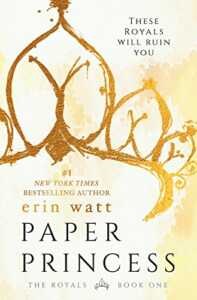 Case in point. I’m currently reading Erin Watt’s Paper Princess, which received an A- grade here at AAR. And I can see why. I’m completely engrossed and turning pages like crazy. But while I’m loving the general setup between heroine Ella and bad-boy Reed, I keep wincing as the story unfolds, concerned that this one isn’t going to check the boxes I need checked to buy their evolution from hate to love.
In order for me to fully enjoy an enemies-to-lovers romance, several factors must be considered.
 First, there must be a real reason the characters are enemies, something deeper than a simple misunderstanding which could be resolved with an adult conversation. Whether they are from warring factions (A Kingdom of Dreams), competing for the same position at work (The Hating Game) or an academic/professional rivalry (Carry On), races/species/beings who hold severe prejudices (Cruel Prince) or one character did the other character wrong in the past (Better Than the Movies), the animosity between them must be genuine and understandable.
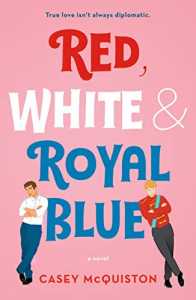 A lot of enemies-to-lovers setups involve characters who get the wrong idea about each other either because of one or two negative encounters (Pride and Prejudice, Red, White, and Royal Blue), because of stereotypes (The Deal) or because they’ve been warned to stay clear (Fourth Wing). I’m okay with this as long as we aren’t dealing with some Big Misunderstanding or the enmity is based on lies. I need to see how the characters’ opinions of the other changes and evolves due to actions taken and, if necessary, the appropriate amends are made.
Pride and Prejudice works so well because Elizabeth Bennet’s initial dislike of Darcy is legitimate. He is a pompous douchebag who insults her. But over time, she comes to see that this behaviour isn’t because he truly believes himself as better than everyone (or at least not better than Lizzie), but because he’s introverted and a product of his upbringing and societal expectations. It’s not just his efforts to help Lydia and the Bennett family avoid ruin, but his willingness to change once Lizzie calls him on his BS that allows us to believe her dislike evolved into genuine affection and love.
Next, I must be convinced the characters genuinely dislike each other. I don’t want to see the literary equivalent of a girl slap fight. I want genuine anger, actual revulsion, or maybe best of all, scathing indifference. One way this is accomplished is when the characters themselves are disgusted that they are developing positive feelings for their supposed enemy and most loathed person on the planet. They should be dismayed and disturbed that they have any feelings other than contempt.
Ironically, this need to believe the characters truly dislike each other creates a paradoxical situation for the poor author, because the actions of either party cannot be so heinous as to make them irredeemable. This is where a lot of stories fall apart. Either the animosity between the characters isn’t strong enough to sustain the enemies dynamic (and they are kissing within fifty pages) or the expressions of hatred go too far and create mean-spirited, unlikeable characters and/or door-mats out of those who end up loving them. An example of a book that many people love but I found took things too far is Penelope Douglas’s Bully.
This is my issue with Paper Princess. So far, ‘hero’ Reed has left Ella to walk two miles home alone in the dark, he’s slut shamed her, he’s sexually harassed her, and he’s turned kids at school against her. He’s walking on the edge of the moral event horizon, and I’m anxious to see how or if he can turn it around. Meanwhile, Ella quite often gives back as good as she gets, but a lot of the time she doesn’t. I find myself shaking my head that 1) she’d put up with Reed’s crap and, more critically 2) she’d ever be able to forgive and love such a jerk.
It’s a very fine line to walk. A person who is an enemy simply because ‘they were once mean to me’ is hardly an enemy, but one who mentally, physically or emotionally abuses another human being is damaged goods to be avoided.
One way this paradox can be navigated effectively is to make sure the power balance between the characters is relatively equal. This is because people who are equal can be enemies. They have the ability to fight the fair fight. But when there is an extreme power imbalance and one participant can’t walk away or fight back effectively, we’ve got something more along the lines of abuser/abused-to-lovers.
I’m not talking about both characters having the same level of authority, financial means, social status, etc., but rather that both can give as good as they get. In Paper Princess, Reed has money and status while Ella is basically a homeless orphan. On paper, he’s got all the power. But Ella is quick on her feet and able to bring Reed down with a well placed insult or snark. They are mentally equal, with Ella able to hold her own. (Maybe that’s why I’m scratching my head when Reed pulls some horrible crap and Ella takes it without comment.)
 When you do have a substantial power imbalance, you can end up with some very dark stories. One of the best** enemies-to-lovers trilogies is Captive Prince by C.S. Pacat, in which one of the main characters becomes a pleasure slave to the other main character. Their journey to love involves some brutal situations that are truly questionable, but if you want to see a writer take a relationship the full length of the spectrum from absolute enemies to devoted lovers, this trilogy accomplishes that well.
In the end, I will always jump at the chance to read an enemies-to-lovers story or watch a show where that form of relationship is featured (right now I’m watching Netflix’s The Witcher and loving me some Geralt and Yennefer, and I’m still swooning over Bridgerton Season 2’s Anthony and Kate!). I’m even more thrilled when the writer gets the dynamic just right, giving me all the feels.
If you are interested in some enemies-to-lovers recommendations, you can check out our enemies-to-lovers tag to find books that AAR reviewers have enjoyed.
What titles would you recommend that provide true enemies who evolve to find genuine love?
~ Jenna Harper
NOTE: Captive Prince involves some very dark scenarios, including rape, sexual slavery, and physical abuse. It’s not for those who are sensitive to these topics or find that such actions make a character completely irredeemable regardless of the context.
Interested in finding more books AAR Loves..?
Check out these posts:
Yes We Can! Our Favourite Activist Heroines
Romances featuring Refugee Heroines
Romancing it Royally – Some of our favourite royal romances
AAR Loves… Historical Romances featuring scientist heroines
AAR Loves… Romances featuring music and musicians
AAR Loves… Romances featuring realistic parent/child relationships
AAR Loves… Partners to Lovers romances – Part One (Military, law enforcement etc.)
AAR Loves… Partners to Lovers romances – Part Two
Five Baseball Romances Worth Your Time
AAR Loves… Representation of Disability and Chronic Illness in Romance (Part One)
AAR Loves… Representation of Disability and Chronic Illness in Romance (Part Two)
AAR Loves… Romances featuring marriages in trouble
AAR Loves… The Best Slow Burn Romances

Some enemy-to lover’s books that I’ve enjoyed are A Lady’s Code of Misconduct by Merdith Duran, Like No Other Lover by Julie Anne Long, My Beautiful Enemy by Sherry Thomas, Tempting the Bride by Sherry Thomas and The Black Hawk by Joanna Bourne.
All stellar choices!
You’re on my list! I love to keep tabs on the best writers around to find out how they’re furthering their careers. Every article I read from you is superb. You have a remarkable talent. I don’t remember the last time I read something of this magnitude. You’ve created a masterpiece with this. I’ve never even heard of half the words you use, and yet I seem to understand every single one of them! Do you have anything else that I could read? I’m eager to learn more about this world you’ve created in your romances.
Great post Jenna! I have a Goodreads folder (of course) with enemies to lovers romance reads. Favourites that come to mind are Heated Rivalry by Rachel Reid, At First Spite by Olivia Dade, Wild at Heart by Zoe York, A Heart of Blood and Ashes by Milla Vane, Well Met by Jen DeLuca, The Austen Playbook by Lucy Parker, and Hate to Want You by Alisha Rai.
Goodreads folder link: https://www.goodreads.com/review/list/29334580-maria-rose?ref=nav_mybooks&shelf=enemies-to-lovers-trope
My favourite trope is (different sides) enemies-to-lovers like in Shards of Honor by Lois McMaster Bujold and The Spymaster’s Lady by Joanna Bourne (both of who’s heroines are in my Pantheon of Heroines). That is a PROPER impediment to love, rather than the petty dislike in most allegedly enemies to lovers books, or, worse, a character’s internal impediment which disappears within a few pages when the author wants it to.
Great choices! I can’t believe I forgot Shards of Honor! It’s one of my favorite books of all time. Even with the war in the background, it’s such a character driven story and their conversations are so well done. I need to listen to that again. I also enjoyed The Spymaster’s Lady. I didn’t have either of these books tagged as “enemies to lovers” which is an oversight on my part.
The romantic Shards being my favourite during my 2016 reread of Vorkosigan (Memory is usually my favourite) is what eventually inspired me to try romance genre books. Now The Spymaster’s Lady is my favourite book of any genre.
Books like Shards or TSL have too much mutual respect and not enough mutual loathing for most people looking for enemies-to-lovers, so not tagging them as such is reasonable IMHO.
Agree.
Being on opposite sides of a fundamental divide does not need to negate personal respect.
In fact, it is a brutal objectification of another person to „I disagree with you so I hate you” or „you are in my way so I hate you”. Which in the two books above would have been brutal, but justified since the context is actual war, not just some disagreement.
So, yes, both books are outstanding because they happen in a war, and yes, they are not enemy to lover, I agree with Sean’s reasons, the H/h never take war as personal enmity.
Many enemy to lover do not work for me because of that. I could not get into the Hating Game, and many others, because I felt that this was happening: I want the promotion, you are my competitor, so I hate you.
I am happy that this discussion – and the AAR list – pushed me to finally try Hot Copy, which starts off so good with a very reasonable enemy situation, I am really interested to see where it goes, excellent writing, well crafted characters – and by now, I can handle the grief for a dead parent that is present as well.
I read them before I added the enemies-to-lovers shelf at GR, so that’s the main reason. I tagged A Spendid Defiance by Stella Riley which also has an “across enemy lines” romantic arc.
I probably have more books in my list that fit this definition (on opposite sides) or the antagonist to lovers trope that aren’t tagged because I read them years ago.
BTW, I’m assuming you’ve read Komarr and A Civil Campaign. Did you like them? I love both of those books because of the relationship development, and also because A Civil Campaign is Bujold’s tongue-in-cheek homage to Georgette Heyer and Regency romances.
I love both books, and the Ivan book too, I just like how LMB writes love a lot – I generally deeply love her books, they are so rich and layered, and her worldview is so so good – and find her love heavier stories particularly enjoyable. I also found the slow and quite action-poor GENTLEMAN JOLE excellent, after losing a husband and way of life myself, the slow rebuild of two mature characters was wonderfully relatable. And very different in tone from the youthful love stories.
Civil Campaign is amazing – bug butter…. I just start laughing every time I think of those bugs and their great escape…
Nothing to do with this thread, though.
By the way Sharon Lee & Steve Miller’s Liaden? Wonderful love stories, both Agent of Change and Conflict of Honors are great love stories, very similar in tone to LMB – do you know those? And they spawned a huge universe, all worth reading.
You know, I didn’t get to Ivan’s book! I need to finish that series some day.
I’ve heard of the Liaden books but never read them! Thanks for recommending them. I didn’t think they had a romantic arc. I can do with a love story nottaking center stage, but I really like some sort of relationship development in my genre fiction, even mysteries or sci-fi.
I strongly concur with recommendations for Bujold and Lee & Miller’s Liaden Universe. For Liaden books and reading order, they have a site ( https://korval.com/publication-list/correct-reading-order/ ). I have read the books in the original Liad trilogy (Agent of Change, Carpe Diem, Conflict of Honors) more than 20 times.
Despite multiple attempts I have never been able to get into Liaden.
My second favourite SF relationship series is David Drake’s Leary? RCN? series. Found family rather than romance but what a found family.
For me Komarr is one of the flat out weakest books in the main sequence of Vorkosigan (starring a Vorkosigan or Vorpatril).
Civil Campaign is better but honestly I prefer Ivan’s book and Gentleman Jole when it comes to romance.
Like Diplomatic Immunity and Cryoburn, Komarr is slow and a bit sad for me, but when in the mood, I like their thoughtfulness.
I adore Civil Campaign as one of the few books where a madcap romp is perfect for my sense of humor – which is so different for each of us.
Ivan is not as good, but still fun.
Liad: I am sorry, because I love it so, but nobody can force themselves to like Sth, so it is what is is.
Will try Drake – found it, clearly numbered, so I know where to start.
Romcom is my favourite romance genre and Lucy Parker is perfect for my sense of humour, although the funniest book I have ever read is the fantasy romance Swordheart by T Kingfisher.
I hope, but doubt, that the interaction of Leary and Mundy is as special for you as it is for me.
I loved Swordheart. I also enjoy the Paladin series, of which book one and two are frequent rereads. All are good. I adore the interaction/ self awareness of her men and women (and their blind spots) !
Will let youknow about Leary – downloaded a sample.
Oh and Lucy Parker is very good – her celebrities / actors are a bit more mordant, I like them more, but all books are good!!
I was very impressed with Lucy’s last book. It had less humour than most of the others but was just as good.
I assume you know her first book was under a different name, but just in case, Artistic License by Elle Pierson is Lucy’s funniest book AFAIAC.
I need to reread her latest – it irritated me in a lot of small ways that maybe on reread do not matter ( the royal side characters, the improbable recluse writer, the father reunion were all over the top for me) but sometimes, the second time things gel better.
yes, I loved that book under the other name. Will reread, too – thanks for the reminder on that one.
Her latest didn’t irritate me in the way I expected it to… I thought he should’ve been fired at the end of book one.
It was nice having a reasonable basis for a fake relationship for a change (Perhaps my least liked trope due to the absurdity of their reasons for it this side of dark romances which I flat out do not read).
“the father reunion” You monster, that was very sweet. ;-)
Yes, definitely a monster if you lay it on too too too sweet – coming out of nowhere after such a long long silence… too much sugar for me… big grin!!
But really, crazy royal auntie could have been perfect, but crazy royal auntie with mysterious spy powers … again, just too much
I really liked the hero, I would have liked him to have a bit more context, family reunion and some healing or so, I really craved some of that for him.
In all, it was unbalanced for me, somehow. But that may be an issue of expectations from other books by her, that is why I need to reread.
I notice more and more that what I bring to a book makes such a difference- my mood, my degree of patience, my expectations of a beloved author… I am glad I am not a reviewer, I would post completely different reviews of books a year or so apart, I think.
Hero was interestingly damaged, and the fact he has a found family does, of course, make me melt.
Nothing can ruin a book more than high expectations.
I know my ratings when buddyreading or buddywatching can’t be trusted (adds half a star or so ) so I always note that in my records.
I found Codename:Charming to be less cohesive than her other books. It couldn’t decide if it was a serious look at difficult backstories or a farcical comedy. I felt Parker didn’t succeed in meshing the slapstick humor with the more serious elements.
Lucy has a history of being unable to mix serious and comic. The Austen Playbook took a notable turn from romcom to romantic drama halfway through chapter 15.
4 is my favourite Paladin’s. VERY happy that she went back to MF as MM doesn’t do anything for me. Agreed the self awareness of her characters is wonderful. If you are up for straight fantasy, the Clocktaur duology from the same world as Paladin’s is good.
I like the “antagonist-to-lovers” description better, too, and I think it better describes most of these types of books. I don’t have the same criteria as you, I don’t mind if the protagonists don’t really hate each other. They can just end up on opposite sides of something and/or there is a strong emotion clash. A good example of this is And Then You by Briar Prescot (reviewed at AAR by Caz), where one protagonist, Steph, can’t stand the other because he’s “perfect” and Steph feels judged. Quinn, on the other hand, does think Steph is a screw up, but there is more antagonism than hate either way. (this is a wonderfully emotional book, btw)
Other titles I’ve enjoy:
10 Things That Never Happened by Alexis Hall
The Mechanics of Lust by Jay Hogan (only one of MC was antagonistic)
Best Supporting Actor by Joanna Chambers
On Board by Jay Hogan
Headliners and Battle Royal (and others) by Lucy Parker
Conventionally Yours and Out of Character by Annabeth Albert
Sweep of the Blade by Ilona Andrews
Proper Scoundrels by Allie Therin
Garland of Straw by Stella Riley (A Spendid Defiance by the same author- the protagonists weren’t antagonistic to each other, but were actually on opposite sides of a war.)
Faro’s Daughter by Georgette Heyer
Miss Wonderful by Loretta Chase
Faro’s daughter is a favorite of mine too.
I’ve seen the term antagonists-to-lovers used interchangeably with enemies-to-lovers, and I actually prefer it because, to me at least, it implies that there is more to the couples’ conflict than a complicated emotional history or mutual “dislike”. My favorite exploration of antagonists-to-lovers is CD Reiss’s IRON CROWNE: she’s an environmental lawyer, he’s a property developer with a reputation for skirting environmental regulations. Let the sparks start flying!
I see what you mean. I think, for me, they are almost two separate tropes. I would define “enemies-to-lovers” as involving actual enemies based on true negative emotions. The MCs do actively hate or dislike each other for whatever reason. And then I would consider “antagonist-to-lovers” as something different, wherein the animosity is based on things like conflicting agendas or goals (as you described for Iron Crowne) or rivalries. Not that these conflicting agendas can’t result in negative feelings (like in The Hating Game) but the reason for the negativity is something other than visceral reactions to the other person. Two great tropes when done well!