
Where do you fall on the fanfiction controversies?
I’ve been fascinated by some of the conversations the internet has been having about fanfic and the ethical/financial questions it raises. We live in a time where fandom no longer involves just buying a one-off product but often means investing in the whole world of that commodity via websites, online communities and yes, fanfiction which breathes fresh life into it. In that atmosphere, just who owns a creation that’s an offshoot of an existing creation? And is it even ethical for such a thing to exist?
My first introduction to fanfiction preceded online activity. It came through the Star Trek: The Original Series novels, that were published by Pocket Books between 1981 and about 2014. These stories were for fans by fans for the first decade-and-a-half or so. They sold well enough that the publisher eventually pulled in professional writers to do the honors, but I felt 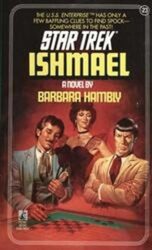 that damaged the quality and I quit reading them after a few efforts left me more frustrated than entertained. What had drawn me to the books wasn’t the solid writing, but the sheer love of the universe they were set in that leaped from the page. Even when the plots had holes, the knowledge the writer displayed – of the characters, episodes, events, and moments that made up the Star Trek universe – far outweighed any flaws in the prose. When the novels worked, they produced masterpieces like Ishmael by Barbara Hambly and Yesterday’s Son by A.C. Crispin. I did not think the novels ‘less’ because they took place in an already existing universe with familiar characters. I actually thought them ‘more’ – the author had to tread a very fine line of understanding the world of another writer and delivering on the expectations of fans while still creating a fresh story.
Those tales were (obviously) of benefit to the owners of the original (NBC/Paramount)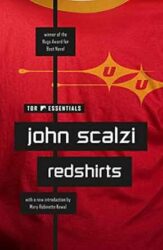 because they were published under their imprint and with their permission. However, I’ve often loved books which are based on other books/works but weren’t published under that imprint. One outstanding example: John Scalzi’s Redshirts, which is a hilarious, intelligent look at campy sci-fi shows that reminds me a lot of Trek and is just absolutely brilliant in its own right. It’s hands down one of my favorite SF novels. And the great thing is, you don’t have to have watched Star Trek to love it since it works so well on its own.
Romance has its own fanfiction. Think of all the stories set around Pride and Prejudice, Rebecca, Jane Eyre, or Wuthering Heights. Whether Elizabeth becomes a dragon rider or an amateur sleuth, it seems we love to see tales that continue/enhance, or reimagine her story.
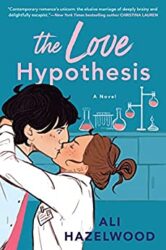 So why am I boring you with all of this? Technology and sites like Wattpad have changed the nature of fanfiction. It’s no longer solely in control of the conglomerates that own the intellectual property rights to whatever universe fans want to play in, but in the hands of the readers. Add to this that some fanfics have transitioned published novels – Christina Lauren’s Beautiful Bastard and E. L. James’ Fifty Shades of Grey were both initially conceived as Twilight fanfics. Ali Hazelwood’s The Love Hypothesis and Julie Soto’s Forget Me Not both began as Kylo Ren and Rey fanfiction (Star Wars). And a spate of books that started as Dramione (Draco/Hermione) stories are set to hit shelves this summer.
For some, the idea of these books and their being openly marketed as fanfiction rewrites is disturbing. The first concern seems to be the advertising, which calls into question the degree to which sales can be built off of another work. I completely dismiss that. Many, many books are marketed as “for fans of” while bearing absolutely no similarity to whatever it is those fans love. I am still – a good decade down the road – angry about the book labeled “for Downton fans”, whose only similarity to Downton Abbey was that both took place in the
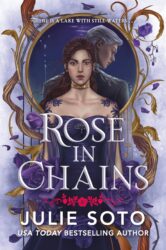
early 1900s and involved a large house. The second concern is that it blurs the lines between originality and plagiarism. I tend to disagree with this as well. Unlike those early Trek works I mentioned, the new fanfiction-reworked-into-novels often differs significantly from the work that inspired it. The character of Toven in Rose in Chains resembles Draco Malfoy only in appearance – and not the appearance of the character in the book but the actor in the films. I had to be told it was based on Draco/Hermione fanfic to know that – and I’ve read the Harry Potter books at least half a dozen times, so if anyone should pick up on HP vibes in a novel, it’s me. About the only thing Christian Grey of Fifty Shades has in common with Edward Cullen is that they are both wealthy and have siblings. That’s not exclusive to those two men. Beautiful Bastard captures even less of the Twilight vibe.
And here’s the thing. Stephanie Meyers has openly said Twilight is based on Pride and Prejudice. The cold, seemingly proud Edward Cullen has mixed feelings towards his Elizabeth (Bella) much as Darcy did. There are constraints to their relationship – Darcy sees himself as marrying down if he follows his heart and marries Elizabeth, and Edward sees a relationship that quite possibly results in his destroying the very thing he loves. The stories may share similar themes, but a slight change in a few factors yields vastly a different finished product.
Take a minute and imagine how other simple changes could alter a story completely. What if Elizabeth had done as expected and married Mr. Collins? What if Mrs. DeWinter had decided she wanted a name and a husband who hadn’t killed his first wife? What if Romeo and Juliet had actually talked and devised a plan together?
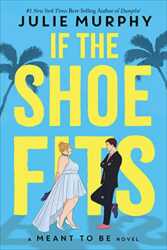 Bookshelves are full of stories that ask those kinds of questions, resulting in a new and exciting tale, which is exactly what the best fanfiction does. And major publishers have long been aware of the appeal. Disney-Hyperion has two lines based on their popular animations – Meant to Be, written by romance authors and telling adult, contemporary versions of their famous fairy tale romance movies, and Twisted Tales, which are ‘What if’ spins on Disney and Pixar films.
Some fear that we will see spates of books that are based on other works, and that it will squash creativity. I’d argue we are already living that. The success of Virgin River inspired small town series books, the success of The Southern Vampire (Sookie Stackhouse) novels inspired the previous paranormal glut, Gone Girl changed the thriller market completely, and Harry Potter upended YA. I could go on and on, but I think you get the gist.
For me, a bigger concern than the above is draconian plagiarism laws that may someday allow large corporations to own general ideas. I don’t want Disney to be the sole purveyor of Beauty and the Beast stories. Nor do I want all tales about young witches and wizards to be considered Harry Potter related when books like Miss Osborne the Mop existed far before Harry was even thought of.
So what do you think? Is fanfiction being converted into published works dangerous to creativity in general? Will it mean that we only see the same old stories over and over, with just the names changed to protect the innocent? Or do we already live in that world, with writers in the past hiding just how much their novels were inspired by other novels? Is it going to break down years of plagiarism laws to allow authors to market their work as based on other works openly? Are authors like J.K. Rowling hurt by fanfiction being mainstream published or are authors like Julie Soto served by it? Over to you!
~ Maggie Boyd

Interesting article on fandom and fanfiction. https://sherwood.news/culture/fandom-is-big-business-and-wattpad-is-poised-to-cash-in/?utm_source=snacks&utm_medium=email&utm_campaign=snacks_20250804&utm_content=1a6149a7ddacc820e167290e444f6fd2
I admit I side-eye published fanfic pretty hard, but I can’t remember any specific ones that I’ve read. (My ability to remember books has taken a nosedive.) They tend to be hyped, and I avoid hyped books. My issue with them is that if they treat the original work as backstory and a reader hasn’t read the original, then they can feel pretty hollow unless the writer really transforms their version with enough details for it to be a stand-alone.
Fair point. My experience, thus far, is that none of the published works have done that. I have read some actual free fanfic that does, but nothing thus far that has made it beyond the web. Often, authors create entirely different universes for their books, such as what if Edward from Twilight were a man into BDSM instead of a vampire. The change forced the author to create an entirely new backstory and world for the story to take place in.
See, there’s a fascinating thick line between published tie-ins and serial number filed-off novels. The difference is usually that the filed-off-serial-number novels were once fanfic, with actual fanbases who know and remember these characters in spite of lacquering over.
In my experience, the filed off serial number books don’t often resemble the original. For example, I’ve picked up the Dramione books wondering how anyone could make the Draco I encountered in HP a romance hero. I’ve only, so far, read four of these stories and none of them acted like HP Draco. They had his history but not the personality that would come from that history. They changed his essence. Same for the Twilight fanfic books. My own opinion based on my limited experience is that the writers in those books asked a question that took the story in an entirely different direction. The characters, especially in the Dramione books, aren’t lacquered over copies of the originals but unique.
The tie-in authors had the much harder task of living up to fan expectations. We expected the story to fit inside existing cannon, not break the mold like a Dramione book does. In that sense, the tie-in connects to the existing fanbase much more strongly than the fanfic stuff.
YMMV of course but that has been my experience.
Ahh, but I’m not talking about how it reads for folks who are coming to the book with fresh eyes; I mean people who already know about the work in general.
Great things to think about. Recently I read an article in an Argentinian periodical about how American patent and copyright laws are destroying American creativity. People do not have the freedom to build upon other people’s works, and studios/publishing houses/corporations just recycle the stories (or products) they already own the rights to and that they know will make money. It would be a different conversation if people were buying the fanfic INSTEAD OF the original work, but the only reason the fanfic exists is because the original is already so popular!
I totally agree that our copyright laws are destroying creativity. And as Dabney said, it protects corporations, not creatives.
My husband has a bunch of patents. The process to get them, starting 30 years ago, was astonishingly expensive. We would not have been able get them had my aunt suddenly died and left me some money. To get all the patents to protect his invention probably cost well over 100K by the end. (We started a company after the first patent and then we raised money from investors–friends and family, at first.
We talk about how that process would be even more prohibitive today–and about how corporations buy up patents that would compete with their current product and deep six the new patents. There is also a proposal by the Trump administration to make the process even more expensive which will rule out even more inventors.
I find the whole thing so depressing.
This is just so damn sad.
I honestly don’t know how I feel about fan fiction – I started a fan fiction that was episodic about Sookie Stackhouse where the author went in a different direction than Charlain Harris had taken and enjoyed it tremendously- unfortunately the autor had not changed the characters names – though she had changed the location and a lot of the traditional vampire lore- and her fanfic was eventually raken down before it was completed (which annoyed the heck out of me) and I’ve also tried some that was just bad writing.
I do have to agree about the copyright laws and the fact that large companies can keep a copyright going long after the original author is actually dead and how it can stifle creativity. I’m actually more scared about what AI is going to do to writing overall. My biggest complaint for the last 4-5 years has been the incredibly bad editing done by publishing houses overall – just bad, bad, bad.
I totally agree regarding the editing. I’m not even sure publishers hire editors anymore.
And they really don’t want critical reviews that let anyone know how little time they are putting into most works. It’s a bad cycle for quality.
We’ve been saying that around here for years, haven’t we? *We know publishers DO employ editors, but it seems they’re stretched very thinly.)
I’ve also said before that I’ve read a 1st book by a new author and given it a middling grade, saying they have potential, and then read their 5th book a couple of years later – and seen no improvement in the style or storytelling, plotting, characterisation etc. I can only conclude from that that they are being given no guidance – otherwise, surely they would be developing as an author?
It’s an across the board issue–remember that 90% of books published sell under 100 copies. Publishers focus the vast majority of their resources on a few big names. Fiction reading is at an all time low. To a certain extent, publishers are just doing what readers are paying them to which is very little.
Part of the lack of development is also the brutal publishing schedule under which many work. Six months per book is not a lot of time to go through the writing process, editing process, and rewrites. And yet that is the time frame under which so many publish romances.
This is true. That said, however, a lot of self-publishing authors manage it and their books are often better edited (copy/line rather than developmental) than trad published ones.
I think the advantage of self-publishing is taking responsibility. Either the author themself does a rigorous editing process or they have friends/compatriots/professionals who they ensure do the job.They likely also pay close attention to their beta readers, who provide them with critical feedback. With traditional publishing, an author may submit their work, assuming the next person in line will do a rigorous edit and get back to them, but I just don’t think that happens. If the books are selling, the editors glance through to see if there are suable errors (like having your heroine invent the Oreo and calling her company Nalisco) but they don’t go back to the author with tips on how to tighten their prose or work out plot holes. Both author and publisher continue to just churn out what is making them money, without concern about what would make it better. Just my .02 of course and it could be other things driving the issue.
Oh, I agree. Self-publishing, when it first became a thing, was rife with mistakes of all kinds, and I imagine that authors realised they needed to tighten things up and do a better job (those that weren’t already doing it, of course) if they weren’t going to be lambasted and treated as a joke.
The problem is, as with everything, that the publishers want more for less; they’re employing fewer editors, paying them less and want more work out of them, and there comes a point at which the job just doesn’t get done properly.
Yep.
I lot of self published authors don’t take responsibility though. Readers buy their work regardless, so they have no incentive to improve. The rise of Patreon has made this worse, IMO. I think some authors have started using their subscribers as beta readers, and their work has suffered as a result.
I agree some self pub’s put out very superior work. But the vast majority does not.
I think this is a key point. If readers will continue to fork over money for substandard product, why should authors try to improve.
Fortunately, the self-pubbing authors I read regularly are those who put the time and effort into putting out a good product. But I agree that not all of them do.
True. It’s a tough situation because buying or not buying is all we can do and it makes it difficult to discuss what the problem is in that kind of cycle. For example, I quit reading historical romance because the books lacked history. Publishers probably just interpreted loss of customers as loss of interest, though. They didn’t recognize that their lack of quality played a part in the whole thing.
Same. And yes, the point about publishers not actually realising WHY readers like us lost interest is a good one.
I really don’t have anything to add except that when I culled my paperback collection, Ishmael and Yesterday’s Son were two of the four ST novels I kept. I donated over 250 to the Friends of the Library when we moved, including several hardbacks. I guess I didn’t realize they were fanfiction.
A lot of the first volumes began by being shared at conventions. The Trek fandom was, I think, one of the first to have fans that gathered regularly to share thoughts and fanfic, homemade T-shirts etc. As the numbers grew, one of the publishers took an interest in publishing some of it and the written series was born. That’s the story I’ve heard anyway. Hambly’s Ishmael is my favorite of all of them. I got it for Kindle the moment it was available .
I’ve never read fanfiction . . . at least not what is for free “out on the internet”. I’ve generally been leery about writers “who’ve come from” fanfiction and “hit it big” as self-published authors (e.g. EL James) because the general quality of the prose has been pretty bad in too many cases. However, I have no problem with fanfiction existing. If anything, I believe it drives demand for the original work. And sometimes even poor fanfiction inspires something really well-written (e.g. Alexis Hall’s How To Bang a Billionaire).
As Dabney notes below, there are only about 6 fiction narratives in existence – everything is pretty much a retelling of an existing story. So I say, have at it, writers. You have to start somewhere. And when the good stuff bubbles up to the top, and an AAR reviewer recommends it, I’ll be there to read and enjoy it.
I’m not big on the free fanfic, either, though I have read a few. I think you and Dabney are correct though that there are only a few narratives/tropes to work off of, especially in romance. It’s important to keep open minds about story origins to me because of that. For example, the Draco/Hermione fans love the character exploration afforded by enemies to lovers. They prefer it to the friends to lovers trope. It yields a different story than what was in the Potter verse, often to the point it doesn’t resemble the original at all. So I really see a lot of fanfic as being more inspired by than a direct copy of. I feel the market should definitely be open to that
I think Austen, Shakespeare, Dickens, Tolstoy, etc… would be thrilled that their works are constantly reinvented for new audiences. Their work truly lives on forever.
Unregulated capitalism with its only goal of maximizing profits makes for very short term perspectives.
And a low-quality product – poor governance, poor manufacturing, zero creativity.
I have so many fears about the misuse of copyright laws. Money is increasingly limiting all aspects of invention–the US’s copyright and patent laws privilege giant corporations with endlessly deep pockets. It’s not a stretch to imagine a world where writing a story about a boy named Harry with a friend named Ron would be verboten even if it had nothing else in common with Rowling’s work. Or one in which a three chord progression is only allowed to be used by those who can pay licensing fees.
I have so many fears about the misuse of copyright laws.
That’s why I’ve been reading fanfics, even in universes I don’t typically like or following couples I never imagined (cough *dramione* cough). I want those doors pushed as wide open as possible.
One thing that incenses me is that corporations–rather like estate taxes–tout copyright, patent, and licensing laws as protection the average creator/researcher/inventor. But that’s not how it plays out. In all of those fields, the courts are ceding to the market–whomever can pay enough to “own” something can control access to it.
Additionally, we are in real danger in every sector, including health and technology, of squashing inventions that could do great good or bring great joy because allowing those new technologies to exist would threaten massive income streams for corporations and those with very very deep pockets.
That’s what I see as well. Large corporations engage smaller companies/creatives in legal battles those little entities can’t afford when the concepts don’t belong to the large corporation or may well have been stolen from those smaller groups.
One way to ameliorate that situation – at least with patents that are based on tax-payer-funded basic science research – is to require a small intellectual property use fee back to the U.S. Treasury.
Many moons ago, I wrote fanfic in a couple of fandoms and enjoyed the challenge of writing a story while keeping the characters as much “in character” as I possibly could. I liked getting into the characters’ heads to work out how they would react given what I knew about them, and I can certainly see that as good practice for writing your own original stuff (I never progressed to that – I can’t plot for toffee!) I know writers – good writers – who wrote fanfic and then made that leap to original fiction and have produced excellent work.
The problem, I think, is that in some cases, the publishers who are snapping up fanfic aren’t taking it through a thorough editing process in order to smooth out the rough edges – a lot of fanfic is episodic and those beats might not work as well in a novel, for instance. Or the characters are very thinly disguised – too thinly in some cases – which is, surely, going to date a book very quickly when that flavour-of-the-month actor is replaced by the next one. (Yes, I’m thinking of that glut of Adam Driver-ish heroes from a year or so ago.)
Ultimately though, I think that what we’re seeing is yet more desperation on the part of publishers to find the Next Big Thing. That is in no way meant to denigrate all those excellent fanfic writers out there, and if one is lucky enough to land a trad publishing contract, then good luck to them. But – and this is also happening with authors who don’t come from the fanfic world – I don’t think they’re being ‘nurtured’ in the way that used to happen, because publishing has become such a treadmill (this is true in music as well) and seems to be more about quantity than quality these days.
this is also happening with authors who don’t come from the fanfic world
I think that’s the key. Whatever publishers are doing with the fanfic authors, they are also doing with non-fanfic inspired works. I don’t know that fanfic does anything other than give them an existing fan base. To me, the problems with publishers would require a complete overhaul of the industry.
I sincerely believe that if publishers pay attention to the quality of the works they publish, regardless of their inspiration, this trend INCREASES creativity. I started writing fanfiction as a teenager, and many friends, now more mature in their 20s, have also begun writing original stories. Many writers start writing fanfiction because working in a world you already know and love is easier than creating your own from scratch, especially if you love fantasy or science fiction.
In fact, if one day I make a famous book and hundreds of people write fanfics based on it, I would feel happy knowing that so many people love what I have created. Sometimes fanfic scratches an itch that many people had but didn’t agree with the author’s vision, an example being Dramione, or sometimes older fans of a series like Avatar: The Last Airbender wanted to see a more mature and complicated romance like Zuko with Katara (enemies to lovers) instead of the target audience-friendly romance that was being presented (friends to lovers).
Sometimes some people wanted a redemption story for a villain that the author thought of as a character created to be hated. If you also modified the world surrounding the fanfic in such a way as to make the story even more unique, even if it retains its roots, I don’t think that’s bad at all. Now… publishers should be wise. I don’t want to see them promoting an erotic novel as “based on a couple from a pre-teen series that 12-year-olds watch” because it simply seems unethical to me. I don’t think anyone would want to see, I don’t know… an erotic book about shape-shifting unicorns promoted as “for My Little Pony fans.” Okay, there are adult fans of children’s series, but it would be… weird to do that, I wouldn’t feel comfortable.
I agree with pretty much everything you said. I’ve often wanted to see a series go a different direction or asked myself, what if character X had done B rather than A? And some of us are just not going to write our own works – we love reading but don’t have the skills to take that next step. I was so grateful to the writers of the Star Trek series who let me continue in a beloved universe. I think fanfic really does scratch an itch.
And honestly, I wish more writers would play in their own universe. Twilight played with the idea that Bella was at a fork in her life’s journey when she went to Forks. What if she had chosen one of the other paths?
Many argue there are only a handful of basic plots. A world in which we stop allowing for endless reinventions of those tales is not one I’d relish.